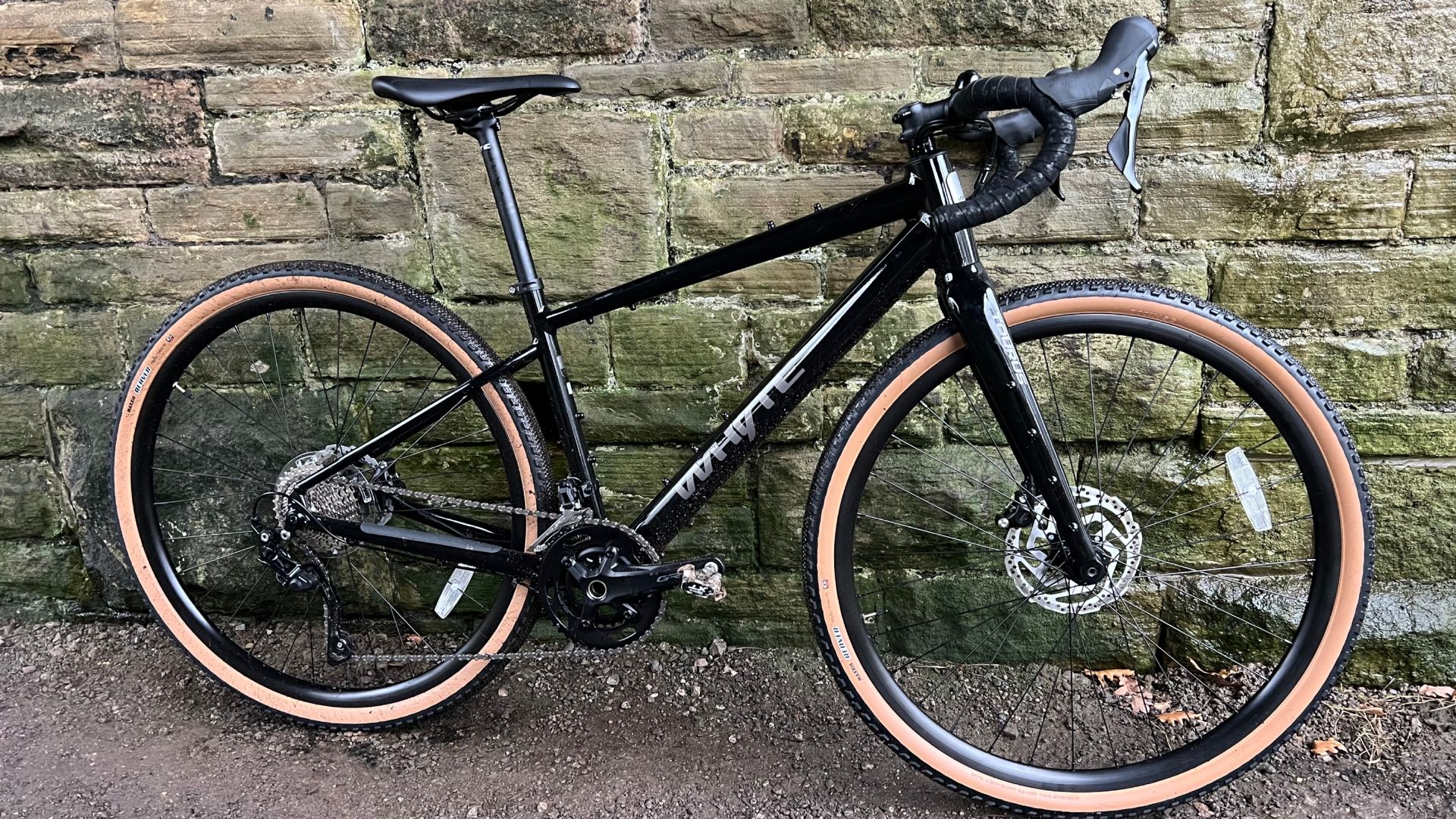
Is the Whyte Tourus a gravel bike for every eventuality?
Combining a bit of this and a bit of that for a surprisingly versatile light gravel and utility bike
I've said it once, and I'll say it a thousand times: if you buy one bike, make sure it can do more than just one thing.
While we all love the feeling of whizzing along the roads at top speed on two wheels, the ability to ride anywhere, with anything, will add far more cycling to your life than just an aero or lightweight one-hit wonder.

The design team at Whyte has firmly drawn on its mountain and gravel biking heritage when laying out the Tourus concept.
In fact, Tourus means stability, practicality, and tireless, and it also refers to the bull that called away Europa in Greek mythology - making me wonder which came first - the bike or the name.
Astronomy and mythology aside, Whyte says the Tourus was developed specifically to be comfortable, predictable, and prepared for every eventuality, with or without cargo loads.
According to the brand, the long-reach 6061 alloy frame, paired with a short stem and wide bars, will boost comfort and confidence, while a custom offset on the fork helps keep the steering light and 'fresh'.
To achieve this result, the brand employs what it calls 'Total Geometry', a proprietary concept that uses a holistic approach to bike design. Effectively, this means the whole bike is developed in unison, not just as the sum of its parts, with, according to Whyte, no angle or measurement taken in isolation, and components partnered in the development stage, not as an afterthought. Whyte says it even factors in full water bottles and, in the case of the Tourus, loaded luggage, which can be easily added using the many integrated mounting points.
This assumes that you stick to its designated riding classification system, which, in the case of the Tourus, is defined under the '2-cross' category. This means it's been designed to be ridden on roads, tarred cycle lanes, or gravel/earthy surfaces - think canal towpaths and the more benign bridalways.
Diving deeper into the specifics of how the Tourus delivers on these ride promises, you'll see that, when compared to other popular gravel bike-packing bikes (in a size small), it has a longer-than-average wheelbase (1072mm) and chainstays (445mm), and a relaxed head tube angle (70°).
Lining this up directly with the likes of a Canyon Grizl or Specialised Diverge, the Tourus will be more balanced under load, but consequently not aimed at riding tight trails at speed.

Looking across the whole spec, the Whyte team has clearly thought hard about how to squeeze the most out of a largely set price point, and I'm impressed to see Shimano GRX throughout. It's 'just' the 10-speed edition, but again, thinking of a fully loaded bike, Whyte has chosen a double chainset (46-30T) to pair with the wide-range cassette (11-34T). It's even thought of braking under load by equipping the hydraulic disc brakes with an 180mm front rotor and a 160mm rear. Oh, and riding too, with the installation of high-volume Maxxis 45mm Reaver Tanwall tyres.
Of course, there will be some compromises. The unbranded 23mm internal tubeless-ready alloy rims threaded with stainless-steel spokes and unbranded hubs are probably the biggest. Elsewhere, the more usual concessions of alloy bars and stems, seatpost and saddle are also deployed to keep costs minimal.
These savings in the budget do have a knock-on effect on weight, with the bike, without any loads, hitting 11.2kg/24.6lbs on the scales for a size small.

I've been riding the Whyte Tourus for a few months now, and it's safe to say it's become the most-used bike in the garage. It's ridden daily for the station commute, has been on gravel rides, and even on the epic school-run pickup.
It's proven itself to be an incredibly comfortable steed, and despite the 'light' gravel heading, I've challenged it with tougher terrains. The predictable handling and stability, combined with fat tyres, have meant it's coped incredibly well over the rough stuff. I'd even put money on the bike tackling more extreme terrain if you swapped out the tyres for something with a little more tread - a noticeable absence when trying to navigate mud or wet grass, the only real times when I found the bike's limit.
On the flat, the bike taps along at a contented speed. Clearly it's no aero race bike, but it's also far from a Dutch shopper - meaning that once you've got it turning, it will happily chip away at around 12 or 13 miles an hour without problems.
Likewise on the descents. I live in a pretty hilly area, and I've never once had to drop anchor, thanks to the bike's ability to handle roads and trails at speed.
The downside of living in a hilly area is that I also have to navigate many climbs. This is where the weight penalty is mostly felt. The double chainring and wide spread of gears help massively, and I'm yet to find a hill I haven't conquered - it's just that you have to do so very slowly. Riding the bike laden with luggage would require even more patience - but that's sort of the aim with the Tourus. It's not designed for bashing out miles hell-for-leather; it honestly feels like a lesson in how to slow down and actually just enjoy riding a bike.
It's been a while since I was on mechanical shifting, and it's a good reminder that analogue shifting is still just as good as you remember it to be, even if I'm already aware of the need to tighten the barrel adjuster to make the gears shift as sweetly as they did when it was box-fresh.
I've not braved the bike-packing aspect of the Tourus. I'm currently still suffering the occasional sub-zero night, and on Sunday it snowed again - but when the weather does warm up, the bike will be the perfect antidote to our high-speed lives with a slow cruise out to a Peak District (UK) campsite or camping barn.
With even the more modest bikes on the market coming in at £2.5k+, seeing a full bike with this specification at the £1200 mark is really refreshing.
But it's more than the initial outlay. Factoring in cost per ride, the Whyte Tourus has, in just a few months, already become one of the cheapest bikes I've ridden - and that's not even accounting for all the car running costs that the bike has also saved me, as it genuinely is such an easy bike to hop on as a car alternative.
In fact, for most of the short rides I don't even don bike kit, wearing whatever I have on, so I can attest to being able to ride in hareem pants, jeans (with a trouser clip) and even a mini-skirt and not feel self-conscious about an unspoken dress code that a speedier two-wheeled machine implies. For longer rides, I'll add the lycra tights and jersey and still feel just as at home on the Tourus - it really is that versatile.
The Whyte Tourus is a fantastic bike, offering versatility and a variety of riding opportunities.
If you are an adventurous gravel rider, it's highly likely you will discover the bike's limits, in which case it's probably worth plumping for its more rugged sibling, the Whyte Verro, which features a 1x12 SRAM Apex Eagle transmission and a dropper seat post but costs £600 more than the Tourus.
If, however, you are looking for a more relaxed pace of life and the ability to add meander and roam to your riding objectives, then this really is the perfect companion to achieve them on. Just remember that you won't be accomplishing them swiftly - because that's exactly not what the Tourus has been designed to do.