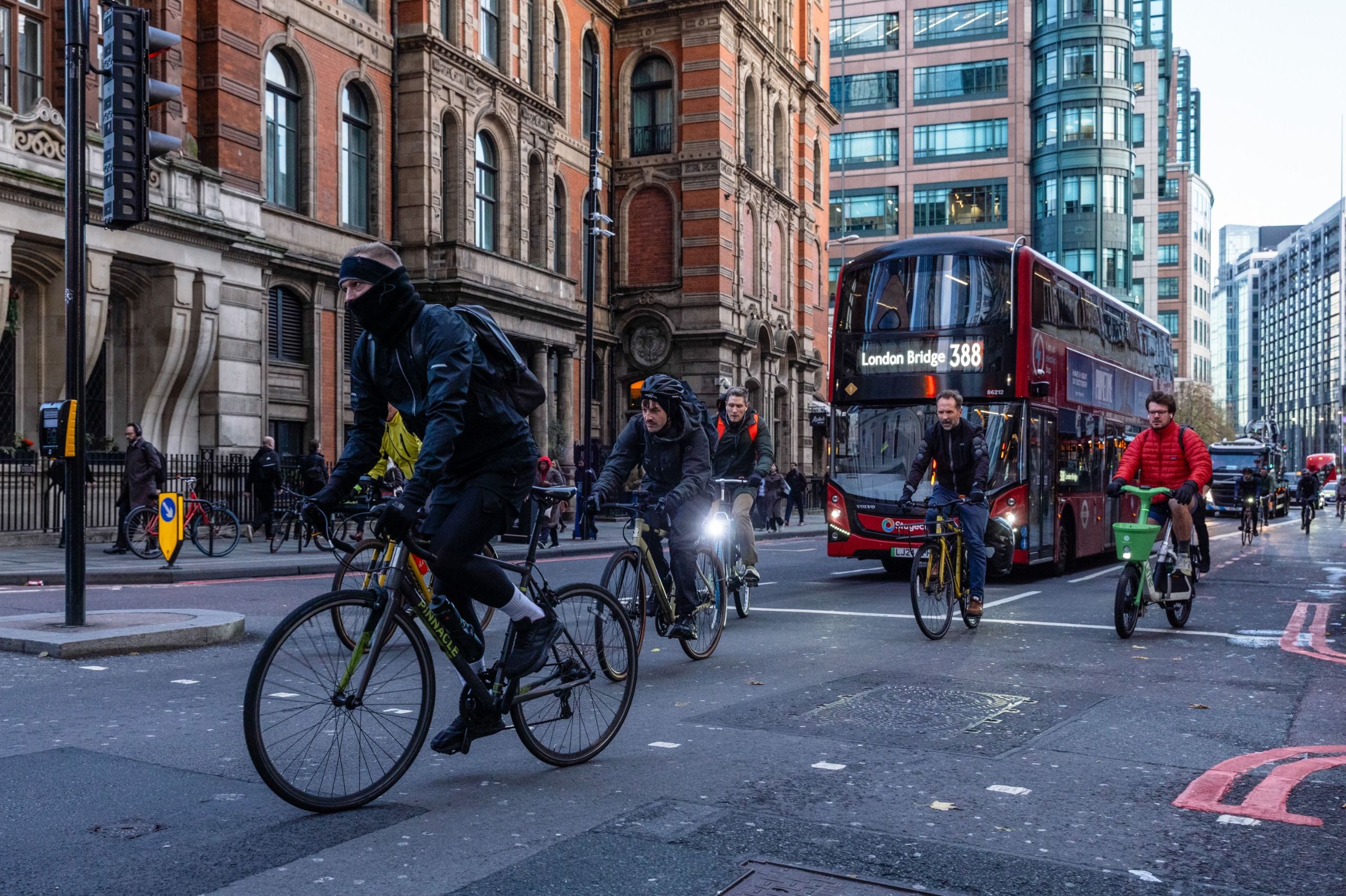
No change at number one – which is exactly the problem
An updated list of London’s most dangerous junctions for cyclists has been released by a pedalling pressure group.
Using collision data obtained from the emergency services, the London Cycling Campaign have, for several years, compiled a map revealing the locations and specific junctions where cyclists in the capital are facing dangerous conditions on a daily basis.
What’s most striking about the list is actually how much has stayed the same, including the very worst spot, with little to no action visibly being taken to improve the safety of commuters and other cyclists in the places where it’s most needed.
As the LCC states on its website: We know where the most dangerous places for cycling are, and we know how to fix them, so why aren’t TfL and councils acting?
According to the crash stats, the most perilous part of the capital’s streetscape is in Wandsworth, on a stretch of Upper Tooting Road, where Ansell Road, Derinton Road, Lessingham Avenue and Price Close all meet the CS7, one of the so-called cycling super highways that have been a feature of London for over a decade.

This is London's most dangerous junction for cyclists - have you ridden through it?
This is less a single junction than a combination of several places in very close proximity where busy side streets intersect with a main road, which has a blue cycling lane leading between Merton and the City.
With traffic constantly flowing in both directions along Upper Tooting Road, and apps apparently pushing motorists on to small side roads, drivers are constantly nosing out into the main road to try and find a gap, effectively blocking the cycle land and causing a hazard, which has led to 27 collisions between cars and cyclists in the last five years, with eight of them being serious.
Just yesterday, while the LCC's Head of Campaigns and Community Development Simon Munk was being interviewed on camera beside one of the junctions, a near collision happened right behind him, perfectly illustrating the danger.
A post shared by ITV London (@itvlondon)
"Concerns over drivers facing a few seconds more on journey times all too often seem to trump dealing with fatal and serious collisions for those cycling, walking and wheeling," Tom Fyans, CEO of London Cycling Campaign, told the BBC.
Simon Munk agrees, and says some solutions could easily be implemented.
"All, or nearly all of the top 10 junctions in our list, and those beyond that in the top 20 and 30, could be made far safer with one of two simple interventions," Munk told Cycling Weekly.
"For side roads where 'ratrunning' drivers are cutting across a main road cycle route - like the top danger hotspot in Upper Tooting - it's 'modal filtering' - use Low Traffic Neighbourhood tools like cameras, planters or bollards to stop drivers using the side streets as cut-throughs. Far fewer turning movements means far fewer collisions.
"The big signalised junctions that dominate our top ten are going to be slower and more costly - but 'all-round protected junctions' as seen in Waltham Forest and Newham in London and popping up all over the UK including Manchester, Cambridge and Luton are really safe and clearly deliverable. But TfL don't seem to even know what they are and certainly haven't even investigated these junctions for their feasibility, let alone delivered any yet."
In 2025, a total of 1,190 bike riders were seriously injured on London's roads – a 20.3% jump from 994 in 2024 – with six cyclists dying as a result of traffic accidents (compared to nine in 2024).
However, while the glacial rate of remedial action on some danger spots is leading to tension between bike groups and local councils, the city wide picture is more positive, with the number of people feeling safe enough to pedal on London's streets growing yearly.
“Cycling has grown considerably in recent years, with the number of daily bike trips in London up 43 per cent since 2019, so we’re working hard to meet that demand and provide the infrastructure needed for everyone to cycle safely across London," the Mayor of London’s Walking and Cycling Commissioner, Will Norman, told Cycling Weekly:
“We’re making life-saving changes at some of London’s most dangerous junctions, with work completed in 46 locations already including major updates like Camden Road and Lambeth Bridge. We’re currently consulting on changes to make Monument Junction safer for cyclists and pedestrians, while works are ongoing at other intimidating junctions including Shoreditch and Streatham Hill.
“Since the Mayor took office, we’ve grown the London-wide strategic Cycleways network fivefold - from 90 km in 2016 to over 450km today - and research shows the vast majority of people feel safe using these protected cycling routes.
We’re investing more than £150m through TfL’s Safe and Healthy Streets funding, including almost £95m in Local Implementation Funding and a £50m Safer Streets programme to help boroughs continue their vital work to make our roads safer, as we continue to build a safer and better London for everyone.”