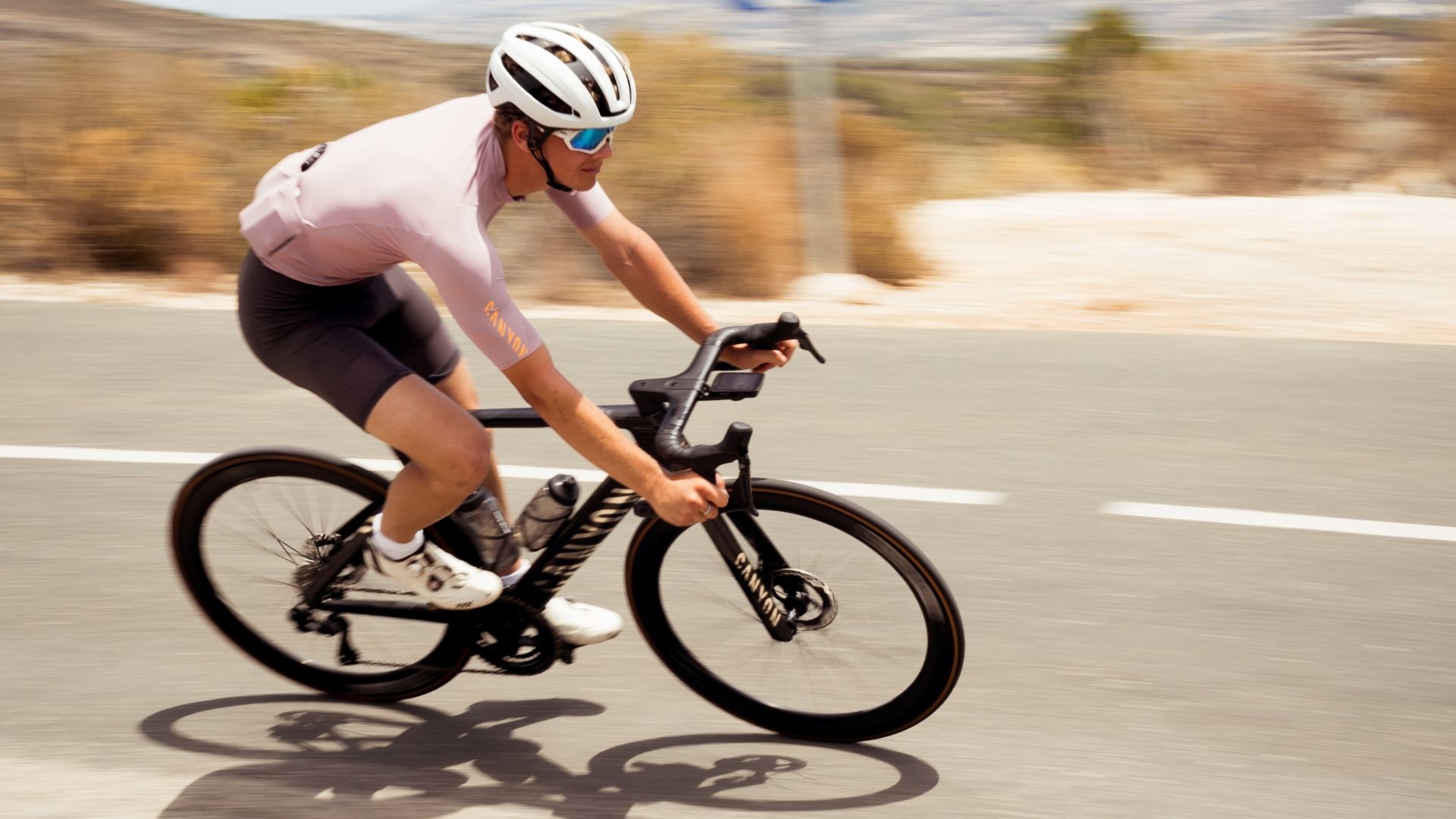
Best aero bikes: fastest speed weapons ridden and rated
Aero bikes are no longer just for the fast men. They now dominate the pro peloton regardless of parcours. See why you should follow suit with our six top-rated and best aero road bikes
The latest race content, interviews, features, reviews and expert buying guides, direct to your inbox!
You are now subscribed
Your newsletter sign-up was successful
If going fast is your primary concern, then one of the best aero bikes is the way to go. While they’ve been a staple in the professional peloton for years, they were often best suited to rolling and flat parcours where speed is a priority.
Times have changed, and in 2026, the aero bike rules the roost, even for the most mountainous days. Take the World Championship last year in Rwanda, which featured nearly 5500m/18000ft of climbing and is now widely regarded as the toughest Worlds ever, won by Tadej Pogacar on a Colnago Y1RS.
But...what could we mere mortals at home expect from an aero bike? In short, even at speeds as low as 13mph/20 km/h, you can see significant wattage savings. So, you don't need to be fast to ride an aero bike; it’s always worth remembering that the rider still creates the biggest obstacle.
Despite a wave of new and very fast bikes having been launched in the last 12 months, it is still the Specialized Tarmac SL8 that leads the pack, and while it is not an outright aero bike, like the 3T Strada or Cervélo S5, overall it is a faster bike for it.

The revamped SL8 retains the agility of its predecessor, but now it's both stiffer and lighter - the SRAM Red AXS-equipped model weighs just 6.6kg.

The Argon 18 Nitrogen is, without a doubt, a fast machine; it delivers a solid combination of speed and comfort at a reasonably affordable price point.

The Strada Italia is an aero bike that finally lives up to the ‘Made In Italy’ hype, and one that should appeal to a wider range of riders, thanks to 3T's slightly unconventional approach.

The Aeroad is light and fast and holds its own among the best aero race bikes. The adjustable cockpit is an added bonus with three width settings.

Officially, the world's fastest bike in a wind tunnel, the latest, now much lighter and refined S5, suffers like so many others with ever-rising bike prices, especially when you still need to spend extra cash to get a good fit.

The Factor Monzo is a cracker of a bike; it ticks a lot of boxes, including a thoughtful spec. There are certainly lighter bikes, but they won't be any more aerodynamic or look any better.

Our expert review:
Reviewed by Joe Baker - CW Tech Contributor
The new SL8 builds on the aero all-rounder profile of the previous Tarmac. Designed a race bike for all occasions - or stages - the update is said to be lighter, stiffer and more aero.
Certainly, the drop in frame weight is notable. Using the same layup as the featherweight Aethos, Specialized have shaved off the grams, with the SL8 frame weighing just 685 grams. This helps make for a total weight of just 6.6kg for the S-Works model in a size 56cm.
We found it added up to a bike that's super stiff and just as responsive. If you like the SL7, you'll be pleased to read that the geometry of the SL8 is much the same. The result is the same playful characteristics that translate to a fast and snappy ride feel.
Perhaps unsurprisingly then it won our most recent Race Bike of the Year Award, where it's ability to do everything well shone through. If you're looking for a single bike to race and train on across varied terrain, the Tarmac SL8 is tough to beat.
Read our full Specialized S-Works Tarmac SL8 review

Our expert review:
Review by Aaron Borill - CW Tech Writer
Argon 18 did not hide from the fact that the goal for the newly revived Nitrogen platform was to “create the world’s fastest road bike". And they have certainly taken a good punt on it, with claims that it's 24 watts faster at 45km/h than the brand's outgoing Sum Pro. The bike is available in two grades: the Pro and the standard Nitrogen. Both utilise the same frame and finishing kit, but the Nitrogen is made from standard modulus carbon fibre.
Given that the Nitrogen was designed for speed, I felt there was only one way to ride it - fast and flat! This was in part because the gains really only come at that 40+ km/h/h/25mph, but once you are there, it holds its speed beautifully, much more like a time trial bike than other all-around aero bikes. This speed is addictive, and even when I was trying to be good, the bike was willing me on.
There is no denying that the Nitrogen is a race bike; while the position isn't the most aggressive, it clearly has a forward-facing weight bias. This does give the front-end great purchase and results in very controlled, predictable handling characteristics. The Nitrogen isn't the most comfortable aero bike I have ridden in recent years; however, it wasn't set up tubeless, so I think, with tubes out on a 30mm tyre, it could be a truly great, fast all-rounder.
The Nitrogen strikes a nice balance between performance and value, offering a future-proof setup for at least a few years. Not only does it clear tyres up to 32mm and go like the clappers, but it's one of the most refined aero bikes I have tested.

Our expert review:
Reviewed by Simon Fellows - CW Tech Contributor
Now it is the second generation, no thanks to UCI rule changes. The latest iteration features a 10mm taller and 10mm shorter design than the previous generation, but compared to its sibling, the racer WPNT is only 20mm taller for the same reach. The big change comes in the now signature 'Vroomen’ wheel-hugging seat tube stays, a distinctive style from Dutch engineer Gérard Vroomen, the man behind the original Cervélo S5.
Don’t be fooled by this more ‘Endurance’ geometry, though. Vroomen claims that many struggle to hold a very aggressive aero position, so the slightly taller and shorter fit makes this much easier, and has the knock-on effect of making the bike actually faster, despite the numbers being ‘less aero’.
On the blacktop, the Strada Italia flatters even the competent riders. Think of the Strada as The Clash with Joe Strummer at the helm; it is undoubtedly punk, but there is an underlying complexity and precision to it that can only be achieved by a true craftsman.
Let's address the elephant in the room, then, the Strada is nearly £12000/$15000. While I am in no way trying to justify this outrageous price, it is far more versatile than the new Cervélo S5 Andy tested, and it will certainly perform better in the wind than other all-round, 'high-end' offerings like the Enve Fray. As I said, that changes very little when it comes to parting with your hard-earned cash; it is one of the few ‘Made In Italy’ bikes I have ridden that deserves the hype.

Our expert review:
Reviewed by Joe Baker - CW Tech Contributor
Another aero bike that makes a solid claim as being an all-rounder, the Aeroad is fast, responsive and pretty lightweight.
There's some compliance there too, with rear-end comfort delivered by a combination of a 28mm rear tyre and a flexing seatpost. However, it's the Aeroad's level of adjustability that really sets it apart from other aero race bikes.
The stack height can be altered by 15mm without having to do any fiddly re-cabling or steerer tube cutting - but does require a proprietary headset tool. The width-adjustable cockpit, according to Canyon, aids the bike's aerodynamics, delivers 40mm of adjustability, three width settings and collapsibility for travelling. Whether you feel the need to adjust your cockpit width is another question, however.
As for the ride quality, we found that the Aeroad excels on flatter terrain, both smooth and fast, with bags of stiffness that aid acceleration. There are some compromises, however, when the road points up. We found that while impressive on short, punchy climbs, on longer, more sustained climbs, the bike did feel a little less forgiving.
Read our full Canyon Aeroad CFR bike review

Our expert review:
Reviewed by Andy Carr - CW Tech Editor
With refinement to the turn of a further 6.3 watts and over 120 gram saving, this the latest version of the uber fast Cervélo S5, helps it to retain its 'fastest bike in the world title'.
While I myself am not the most aerodynamic, the S5 certainly feels very fast out on the road. With weeks of speculation surrounding whether Jonas Vingegaard was riding a new S5, due to the lack of noticeable changes, Cervélo has left no stone unturned in the pursuit of further performance. Indeed, there is a healthy slice of 'if it ain't broke, don't fix it' when it comes to the overall aerodynamic concept, with the fork and handlebar seeing the majority of the watt-saving updates.
What I like about the S5 is that it's not too extreme like other aero bikes on the market. It is aggressive, don't get me wrong, but it strikes a decent balance, and the only change in geometry for this latest version is a welcome addition. This neutral feel carries over to the other areas of the bike. Sure, the handling is sharp and crack on when you want it to; however, it does so with little fuss or fanfare.
What stands out about this S5 over its predecessor, and what many aero bikes are now starting to consider, is the improvement in ride quality of these speed machines. Traditionally, comfort was seen as a weakness of an aero bike, and if you couldn't handle the stiffness, you shouldn't ride one. Thats not the case anymore, we have seen from the gravel world that comfort plays a big part in being able to ride harder for longer. Even on the potholed roads of North Norfolk, where previously the S5 would have almost definitely sent you flying into a drainage ditch. Now, not so much and a shining example of why you can't always visually see a performance.
I can't leave it there, though, as much as I'd like to. The new S5 is even better than the near-perfect bike it was; however, to have to spend even more to get things like a different seat post offset and bar dimensions is a bit rich, given how vital bike fit is at any level, regardless of the fact that this is now a £12k plus bike.
Read our full Cervélo S5 2025 bike review

Our expert review:
Reviewed by Andy Carr - CW Tech Editor
Factor Bikes is now regularly mentioned in the same breath as brands like Colnago, Cervélo, and Enve for offering some of the 'Gucci-est' bikes on the market. You could argue the Ostro Vam is good value over the Colnago Y1Rs, given it's quite literally half the price at £11k. So, to claim the 'even cheaper' Factor Monzo, at 'just' £6000/$8000, is designed to meet the needs of the ‘everyday’ racer, is rich in the midst of a cost-of-living crisis. However, given that other than 9mm of stack, the handling and fit geometry of the Monzo is almost identical to that of the Tour De France-ready Ostro Vam, there is a lot to get you thinking maybe it is a good value bike.
To achieve the magic numbers, the layup includes some lower-modulus fibres, which increase the frame weight to 1,100g/2.4 lbs, nearly 300g/0.6lbs heavier, which is not an insignificant number. You will be pleased to know, though, what factor has done with this frame is surprising. I could reach for all the usual descriptors: stiff, light, eager, quick to change direction, and planted, just like a proper race bike should.
The Factor Monzo is nothing but a cracker of a bike. You might get a bit lighter bike for an extra three grand, but it won't be any slipperier, and you could argue it won't be any more attractive at the coffee stop.
Here at Cycling Weekly, we have a dedicated team of testers whose role is to evaluate a variety of cycling products. They write honest reviews based on their daily use of these products. With their extensive experience, they can effectively compare products, highlight their strengths and weaknesses, and provide an unbiased assessment of their performance.
When testing road bikes, we cover hundreds of miles, evaluating various aspects of their overall performance. We consider the bike's intended purpose—whether it's an aero race bike, a lightweight climber, or an endurance model—along with more general factors like build quality, specifications, durability, and value for money. Don't believe me? Check out Joe's Race Bike of the Year group test, where many of the bikes in this guide were put to the test. Joe rode over 2000 kilometres in the pursuit of the best road bikes that year.
During this testing, our reviewers use their regular routes to assess skills like descending, climbing, and sprinting, enabling comparison with other tested models. Completing these base miles on a repeatable route provides comparable data, such as average speed and familiarity over various surfaces. Routes should include diverse terrain: a long climb, a short steep one, a long drag, flat exposed sections, and urban traffic areas. Reviewers must do at least one long ride on each bike, typically 60-100km or more, and ideally participate in a group ride or race.
Learn more about our testing of the best road bikes and all the products we review over on our How We Test page.
Andy knows a thing or two about bikes, having spent much of his adult life riding them, fabricating and designing them for his own brand, Spoon, going on to win awards and being one of the most desirable custom offerings out there. Andy is a champion of the highest standards in fit, fabrication and finishing.
Aaron is quite simply fast! Alongside travelling the world writing about bikes and cars for over 20 years, he still represents South Africa at a high level and even captained the national eSports team. In the 2025 season alone, Aaron took the top step at no fewer than 18 Time Trials.
If it's got wheels and he can ride it as he stole it, Joe has time for it. Joe loves bikes, and it's infectious. He loves nothing more, though, than a challenge. After taking a step back from elite-level racing, where he was a consistent U23 UCI 1.2-level rider and National hill climb champion due to the long-term effects of Covid-19, Joe loves nothing more than time in the mountains, be that on foot or two wheels.
There are a few things to consider before opting for an out-and-out aero bike, particularly since you can get many of the benefits of a full-on aero bike from an aero optimised all-rounder road bike.
At a most basic level, all aero bikes should come with tubes that have been shaped to smooth airflow, meaning that they will have a slender front profile but elongated rearwards.
However, manufacturers can't go crazy if they want to see their bikes used in races, with the UCI's rules still restricting how deep tube profiles can be. The latest iteration of the rules has relaxed those governing tube shapes though, so the latest crop of aero road bikes has significantly more aero tuning than its predecessors.
Whereas the first aero road bike, the original Cervelo Soloist, had teardrop shaped tube sections, all now use kammtail tube profiles. This means that the tube retains an aerofoil shape at the front, but with the back half lopped off to give it a flat back.

Dropped seat stays and kammtail tube profiles are marks of an aero bike
A lot of people say that aero bikes now all look the same and a possible reason is because of the use of popular dropped rear stays, which the industry has collectively decided is the most aerodynamic shape. Helpfully, it's also comfortable, too.
Many aero bikes include a chunky bottom bracket shell. Again, this enhances aerodynamics as the air flows more smoothly over the bottom bracket area. It also adds stiffness and improves pedalling efficiency.
Integration is also a big feature of aero bikes, with almost all aero bikes aiming to hide as much hardware as possible within the frame.
The key to this is cable routing. The sleekest aero bikes keep the gear cables and brake hoses hidden, routing them through the handlebars, stem, and frame before they emerge close to their partner components, usually on the rear side of the tubes to keep them out of the wind.

It's a feature that's now common on the best all-rounder road bikes too and that's made easier by the switch of high-end road bike groupsets to wireless electronic shifting.
You can also expect an aero profile seatpost with a hidden clamp, which will reduce turbulence. Many aero road bikes also include features to shield the bottles and bottle cages from the airflow and reduce turbulence around them.
Now, however, the market has moved a long way from integrated brakes, and disc brakes are the most common stoppers that you'll find on aero bikes, with some models even being disc brake specific. The bike brand's argue that they've managed to design the latest models around the rotors, or generate more aero savings across the frame.
However, possibly the most important part (or parts) of a seriously sleek aero bike are the wheels. Again, there's been a lot of development in the best road bike wheels with wheel makers typically wind tunnel testing them to enhance their aerodynamic performance in a headwind and stability and aero gains in crosswinds.

Deep section wheels are the norm on aero bikes
Yes, for most people on most terrain, an aero bike will be faster, but if you're considering buying one, you also have to weigh up what day-to-day life will be like with your new pride and joy.
It used to be the case that the more aerodynamic the bike, the more difficult it was to live with, mostly because of complicated internal cable routing. This can make altering cable and brake hose length or raising and lowering stack height a bit of a pain because it involves cutting cables and bleeding brake hoses to do so. However, many modern aero bikes now come with split spacers, which makes this process a lot easier.

Aero integrated handlebars can make cable and brake hose mechanics a bit more difficult
Finally, if you're going to get the most out of your aero bike, then you might want to fit a rear light to up your road presence or you may occasionally find yourself riding in the dark. In this case, aerodynamic seatposts and handlebars can make it a little tricky to fit bike lights,
A standard best bike computer mount probably won't fit to aero handlebars, so you'll often need an out-front mount that's specific to your bike. It may be included with the bike or in some cases it's an extra.
Some makes allow you to fit an integrated rear light into the seatpost, so that it doesn't interfere with aerodynamics. The shape of the seatpost and an integrated light may also limit the saddlebags you can use - but you didn't really want to wreck your bike's aerodynamics with a bag on the rear did you?
Before you rush, wallet open, to your local bike shop in search of the latest aero bike, it's worth considering that there are plenty of other much cheaper ways to make some aerodynamic gains.
The vast majority of the wind resistance that you have to overcome while cycling is caused by you, so your position and clothing choice can make a big difference to your speed and there's a lot of aero optimisation you can do.
Riding in a low, crouched position with your hands on the hoods, elbows bent, is roughly 20 per cent more aerodynamic than riding upright with your hands on the tops.
Similarly, tight-fitting aerodynamic clothing and an aero cycling helmet can also make a significant difference. The benefits might not be as pronounced as with changing your position, but if you're riding along with a baggy rain jacket unzipped and flapping in the wind, even if it is one of the best waterproof cycling jackets, then you can wave goodbye to any gains that you might have got from your expensive aero bike and flash deep sections wheels.
With aero bikes now being available at almost all price points, it's more a case of how much can you afford to pay rather than how much do you need to pay.
At the top-end of the scale, it's not unusual to see aero bikes costing over £10,000 / $10,000, which should be enough to get you a cutting-edge frame matched with some pretty tasty components and deep section wheels for a seriously aero machine that's similar to a bike ridden by the pros.

Top end models like a high spec Trek Madone will cost over £10,000 / $10,000
However, for a lot less you will often be able to pick up a bike with a frame that might not have the same premium quality carbon fibre (and so may be less stiff and will usually be heavier) but will have the same shaped tubes which will still be subject to the same laws of physics, at least on the flat and downhill.
Wheel choice is also important when considering how much to pay for an aero bike. If you already have aerodynamic, deep section wheels, then there's no point in paying more money for an aero bike that comes with similarly posh wheels.
Instead, buy the bike with the cheaper wheels, take these off to use as training wheels, then put on the deep section wheels that you already own for race days.