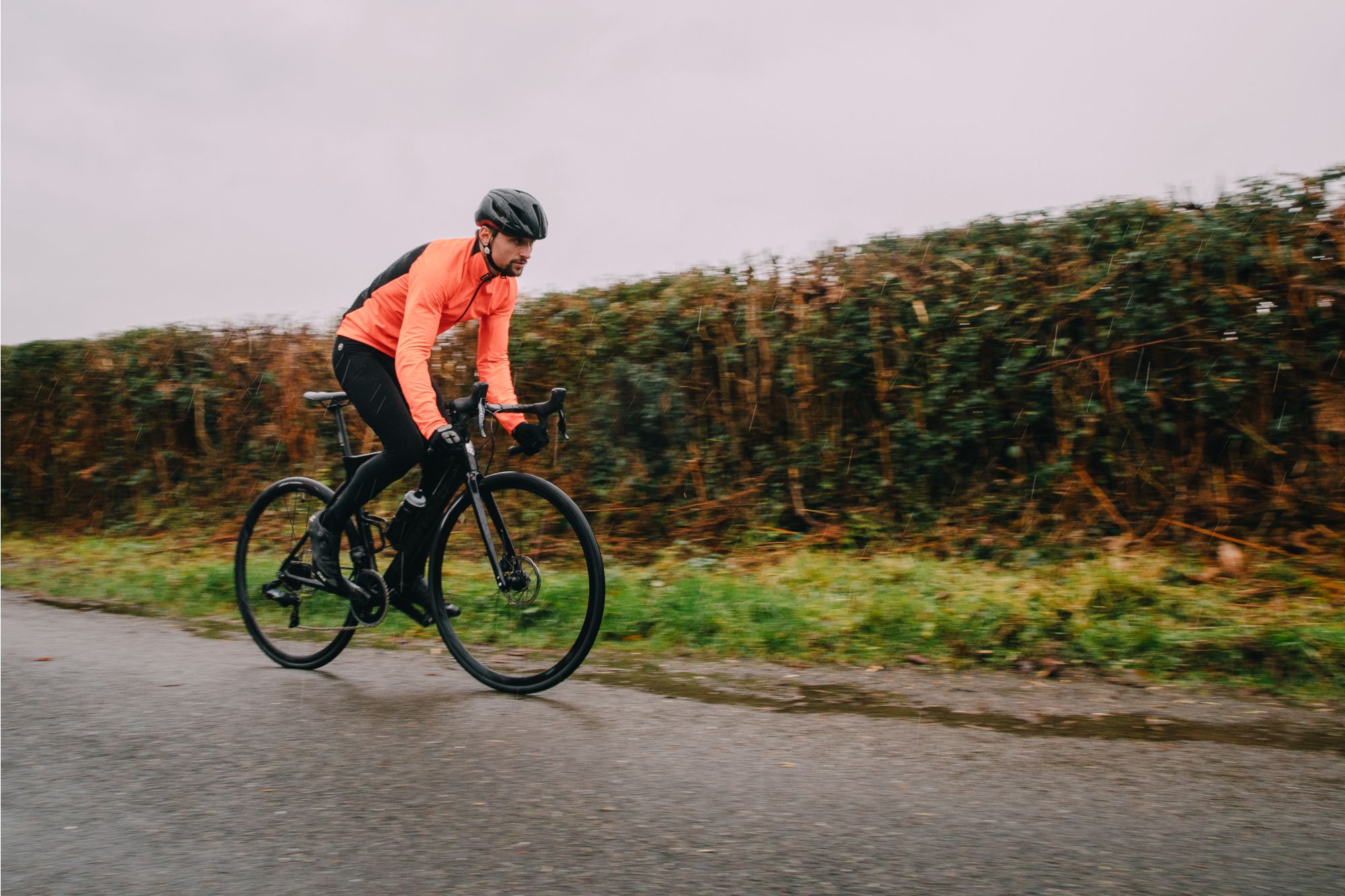
11 tips for cycling in the rain: essentials for riding through the wet weather
Riding in the rain is part of life on two wheels, no matter the time of year. Here's how to get through it, and maybe even enjoy it
Only those who willingly subscribe to the ‘no pain, no gain’ theory can truly relish cycling in the rain. For the rest of us, it’s an inconvenience at best.
But it’s also likely a reality that we need to face. Unless you live in an especially arid region, at some point precipitation will impact your cycling. It might be as a commuter, where the necessity to get back home makes getting wet unavoidable. Or perhaps your weather app proved less than accurate and you’ve found yourself caught in an unforeseen downpour half way through a training session. Either way, unless you’re prepared, it could well put a real damper, both literally and figuratively, on your ride.
So how do you best prepare to make riding in the ride more enjoyable? Here are a few tips that should increase your comfort levels when the heavens open.
This article was first published back in 2022. However, the advice is as old as time, and has not changed. We checked the piece and refreshed the images in October 2026.
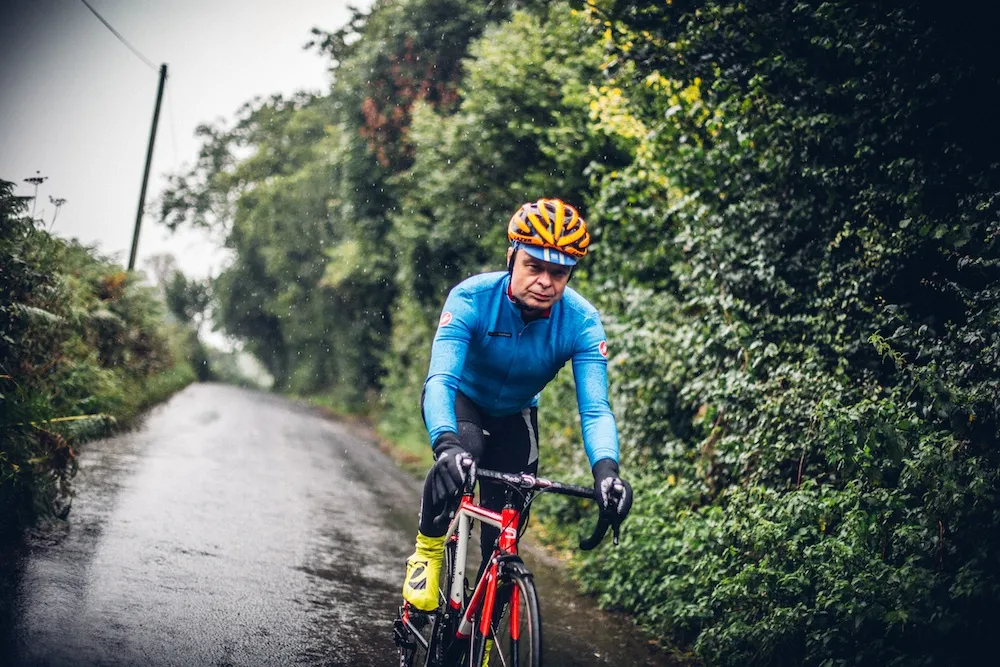
A quality waterproof jacket will also be breathable.
Your first port of call should be to equip yourself with a jacket capable of fending off the rain. The style of jacket will depend on whether you’re a regular commuter or require something suitable for fast road rides. The former might be more generously cut to accommodate layers, while the latter is likely to be a race fit, devoid of access material to avoid it flapping about in the wind.
Either way, the best waterproof cycling jackets should keep your torso dry as well as help you regulate your body temperature. Look for Gore-Tex, or an equivalent, as these feature taped seams but are also breathable.
If you’re looking to travel light then you might get by with a minimal wind jacket that has some form of treatment to repel light rain. However, while these are great for stuffing in your jersey pocket when not in use and avoiding the chills on long descent, they can quickly get overwhelmed if conditions worsen.
Mudguards help when cycling in the rain.
Next to a quality rain jacket, the best way of keeping the rain at bay is to equip your bike with a set of the best mudguards for road bikes.
A full-length set of fenders – ideally with flaps – will not just keep road water and spray off your feet, legs and back, but will also stop the worst of the muck from covering your drive chain, helping to extend the life of the component parts. And if you’re cycling with friends, mudguards will also help to keep those in your wheel dry, too.
If your bike doesn't have eyelets you’ll need to resort to ‘clip on’ guards. These are notoriously fiddly to fit and have a reputation for rattling and rubbing during rides, but they will still do a job.
Your extremities are the first parts of your body to be sacrificed in order to maintain a core temperature, and when your hands and feet get wet and cold, you will feel disproportionally uncomfortable.
The best water-resistant cycling overshoes are worth their weight in gold while gloves are a little harder to get right.
The best winter cycling gloves will protect you without being so thick as to hamper your bike control, as you still need to be able to feel the brakes and gears through all that material. However, many brands produce neoprene gloves which keep light rain out and allow you to maintain dexterity. The best advice is to invest in a couple of pairs for the different temperatures you ride in.
After a ride in the rain you should immediately shower and dry yourself. You’ll want to do the same for your chain.
Instead of soap and a towel, you’ll need a good quality degreaser and a rag. Cover the chain in the degreaser before giving it a vigorous wipe down until it's clean and dry. You can then re-lube the chain ahead of your next ride. Alternatively you can buy dedicated chain cleaning machines that you fill with the degreaser. Given the cost of 11- or 12-speed chains and cassettes, it’s well worth the effort.
It's a good idea to spray the other metallic moving parts too; front and rear gear mechanisms and rim brake calipers, if you’re still using them. Try to keep the degreaser away from the hubs, bottom bracket, wheel rims and brake blocks.
Ideally your whole bike would get washed down after a wet ride. We know that's not very realistic, but cleaning your bike properly can be done in just a handful of minutes, once you have a clear idea of the procedure and the right equipment. Check out our how-to guide on cleaning your bike.
Relatively cheap but nicely effective, a cycling cap with a peak can help to keep the rain off your head and out of your eyes. Worn underneath a helmet, they also do a good job of ‘blocking’ the helmet’s vents, preventing your head from getting overly cold.
Traditionally these caps were made from cotton, and you can still buy these today in a range of designs and colours. You can also buy waterproof versions that will repel the rain rather than soak it in.

Puddles can hide dangerous hazards.
Standing water not only gets you wet, it can be incredibly dangerous as you never know what's lurking beneath. It might just be a puddle, but then it could be a wheel-smashing pothole. The best advice is to steer clear of it.
When you see standing water, check over your shoulder before moving safely out to 'ride the lane' (most standing water will gather near the kerb). Only ride through standing water if you can clearly see what's underneath.
While it’s always sensible to check the condition of your tyres before heading out on a ride, it’s especially prudent if rain is in the air. While fixing a bike puncture on the side of the road isn’t fun in any weather, it becomes a genuinely unpleasant chore when it’s hammering down.
Rainy conditions can also increase the likelihood of getting a puncture next time out. This is because the rain water washes all sorts of muck onto the roads, and when your tyres are wet they pick up more of it than usual. After each ride, take a quick look over your tyres checking for flints, glass and other debris. Also check for cuts in the tyre that could weaken the carcass or allow the inner tube to bulge through.
We’d also suggest riding a heavier tyre in the winter with a thick tread – check out our guide to the best winter tyres for road cycling here to find those that strike the best compromise between rolling resistance, weight, and puncture protection.
Wider tyres can also benefit you here, as they allow you to run them at slightly lower pressures. By doing so, and we only mean adjusting them by 5 or 10 psi, you’ll increase the tyre's surface area, which helps improve your grip as well as increase comfort. You can read more on how to find the right road bike tyre pressure here.
If the rain is both heavy and persistent it’s nearly impossible to keep your feet dry, even if you’re riding with fenders and overshoes. You can add another barrier against the wet by slipping a plastic bag over your socks, then your bib tights (if wearing them) pulled down over the bags, then finally your shoes and overshoes.
A more permanent, less budget version is the Sealskinz Waterproof All Weather Ankle Length socks which do a good job of protecting your feet.

Flashing lights will make you more visible, even in the daytime.
Heavy rain, especially in the colder months, is often accompanied by generally gloomy conditions, which can make visibility far more of an issue. If this is the case, then a set of the best bike lights are essential, just as they are if you're planning to ride after dark or before daybreak.
Whether it's the droplets of water on wing mirrors or a steamed-up windscreen, driving standards drop drastically in the rain. It is well worth making yourself more visible when it's raining, even in the middle of the day.
There are plenty of good quality, lightweight LED lights that can be discreetly clipped to your bike. If you're riding at night, lights that meet legal requirements are needed anyway. Flashing LEDs are a good addition.
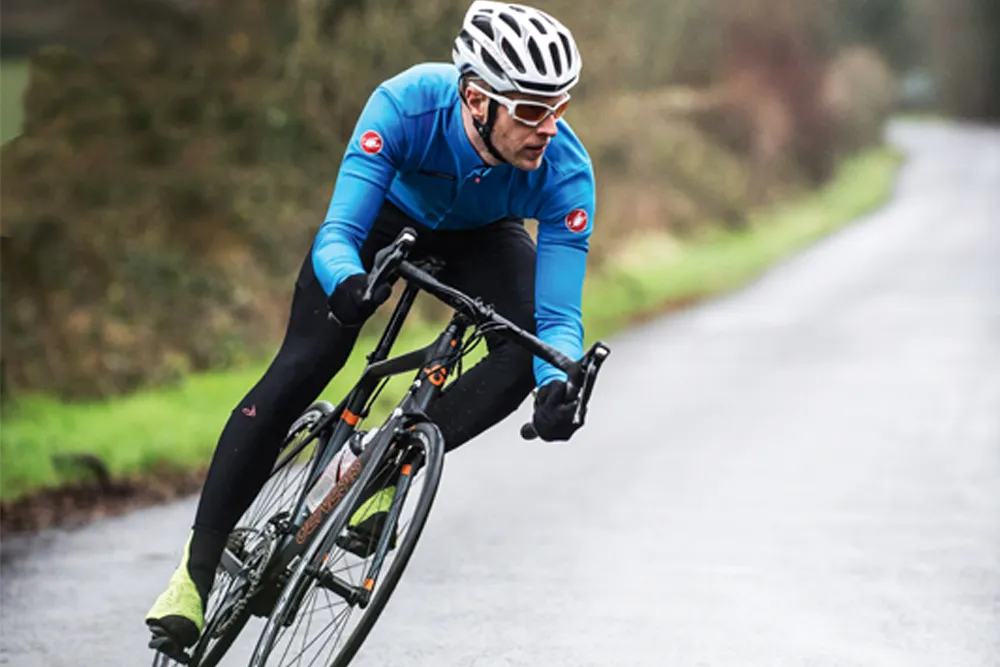
So, we’ve run through the essential gear for making wet weather rides a much more pleasant experience. Sometimes the rain is unavoidable and therefore it’s also worth remembering that honing your wet weather riding skills is important so that, when you do have to use them, you’re well practised.
If your goal of the year is to complete your first 100-mile ride in a pre-booked sportive, it may be raining on the day, and so you’re going to want to feel comfortable riding in the conditions that present themselves.
Cornering safely on a road bike is an essential skill for all cyclists, and when it comes to cornering in the rain you’ll want to be a little bit gentler with your speed and your braking, and approach bends less aggressively, so not to lean into the corner as much.
Brakes can be less effective in the rain, too, so it can be wise to ride at a lower speed than usual to allow yourself more time to spot hazards.

The indoor trainer is a trusty fallback option.
Of course, there is an alternative to all of the measures above: simply stay indoors and jump on your turbo trainer or smart bike instead.
While this can be a challenge during the spring and summer, when the increased hours of daylight seem far too good to waste – even if a shower is due – it has far more appeal during the bitter cold of winter.
Structured cycling workouts indoors on a turbo trainer are easy to follow and are a great way of building fitness. There’s a host of indoor cycling training apps out there, such as Zwift, MyWhoosh, Rouvy, and Wahoo X (the brand’s SYSTM training software and virtual cycling app RGT bundled together), that can make it fun, too.
With punchy HIIT workouts being as short as 30 minutes, you can build and maintain your fitness even when you don’t want to head outdoors. It's a surefire way to stay warm, rather than brace the cold, the damp and the downright miserable.