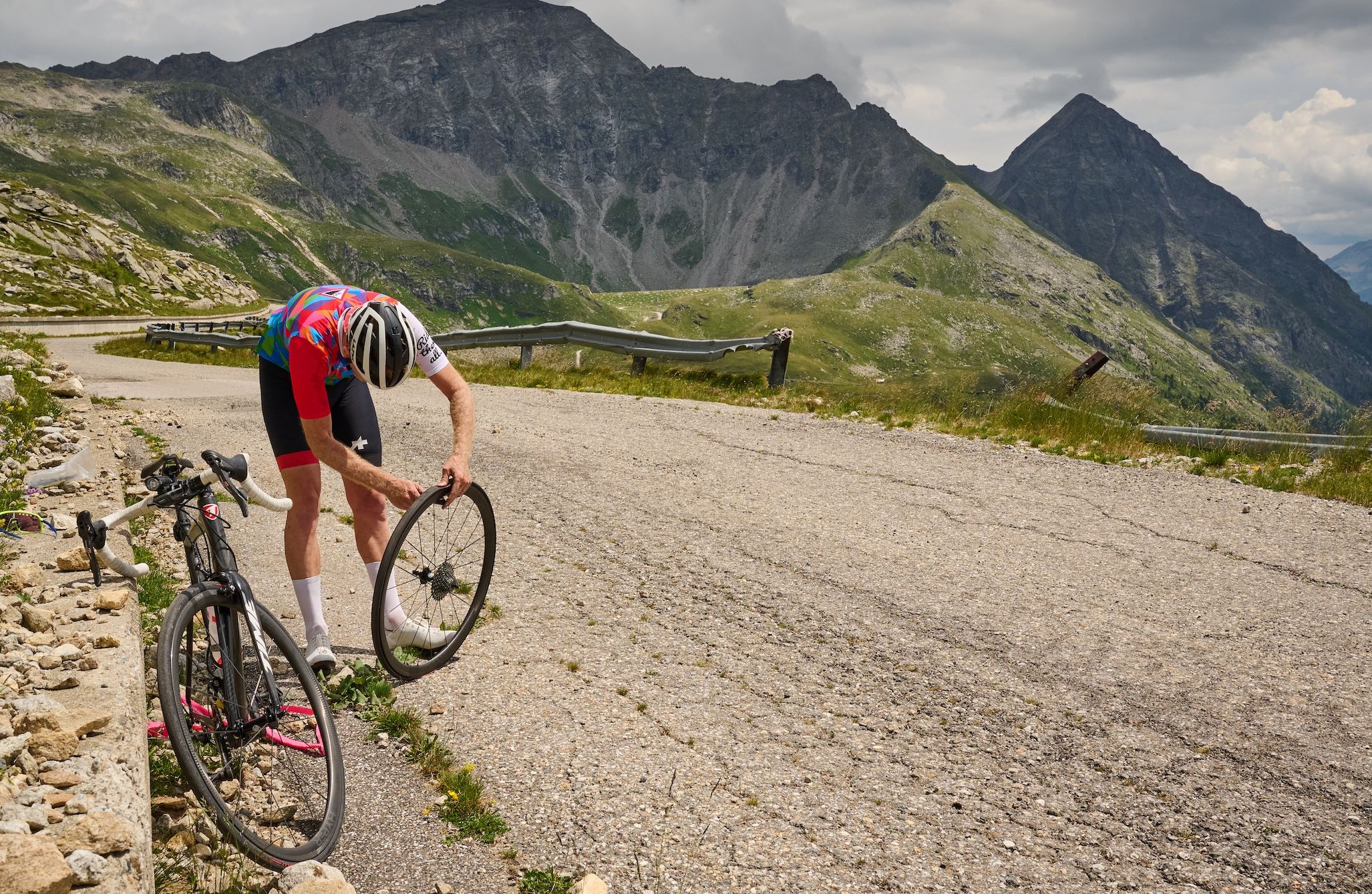
Best puncture-proof tyres for cycling
Tyre reliability can have a massive impact on your enjoyment of cycling, so fit one of these expert-approved best puncture-proof tyres and worry no more
The latest race content, interviews, features, reviews and expert buying guides, direct to your inbox!
You are now subscribed
Your newsletter sign-up was successful
Punctures are every cyclist's foe, whether you are a seasoned or casual rider; however, adding some extra protection against them with the best puncture-proof tyres can be an easy and efficient way to keep the inevitable at bay.
Many modern road and gravel bikes espcially those with disc brakes, can now be run with some of the best endurance tubeless tyres, and the best tubeless sealant, which offers repair and protection. However, for older rim-brake bikes, the best hybrid bikes, including the best electric bikes, may not offer this compatibility, and this is where puncture-proof tyres remain a valuable upgrade.

Delivers great protection, grip and durability without sacrificing the ride quality. Reflective sidewalls aid visibility.

Great puncture protection is the headliner, but it also features a versatile tread pattern and an appealing price tag.

This is constructed in the same way as its tubeless cousin but is designed for use specifically with a tube. Its 'Techwall + Road casing' offers an extra layer of protection without compromising on rolling resistance.

Serves up decent protection without adding too much weight or sacrificing the ride quality. Uses a familiar Conti tread pattern.

Designed for endurance, it's no surprise the Challenger delivers great puncture resistance and longevity.

The confidence-inspiring grip is matched to impressive levels of puncture protection and durability.

The go-to puncture protection tyre
Our expert review:
Schwalbe embeds a super-strong puncture protection belt in the Marathon Plus tyre, and it has been manufactured with a highly elastic plastic rubber. The result is the tyre is effectively puncture proof, even sharp thumb tacks/drawing pins cannot puncture it - and it is rated at 7/7 on Schwalbe's puncture protection scale.
The tread uses Schwalbe's durable Addix compound and there's a wire bead. Together they add up to 750g per tyre, although we didn't feel this when riding, with the tyres feeling comfortable and not inert. It is worth acknowledging that when it came to hard cornering the performance does dip a little bit, as composure is lost somewhat, which meant we couldn't have as much confidence going into these corners compared to other models. Medium cornering was fine though.
All in all, whilst these tyres are fairly expensive, we do think they offer good value because they last well, are highly puncture resistant, and come from a quality manufacturer. The improvement in rolling resistance is a good thing and the fact that they use an amount of recycled C50 rubber in the SmartGuard is an environmental and recycling plus, too. The reflective sidewalls are a good safety feature when riding at night, and they are e-bike compatible too.

Quality puncture doesn't have to cost the earth
Our expert review:
We rode hundreds of kilometres on the H2 Hard Case Lyte and were left impressed by both the degree of puncture resistance and its overall durability. Despite riding over a mix of broken pavement and gravel, often littered with debris and even broken glass, we didn't experience a single flat tyre. And what's more, the tyre is still in one piece, with no cuts or tears, demonstrating a decent life span - and all this after a year of riding that encompassed a harsh winter and a hot summer.
Perhaps unsurprisingly we wouldn't recommend the tyre for longer or faster road rides; it's just too heavy. But if you're looking for reliability on your daily commute, especially if you like to tackle multi-surface rides, then it's well worth considering. Its appeal will likely grow when you compare its competitive, budget price tag to that of some other all-weather commuter-specialist options.

Performance without the hassle of tubeless setups
Our expert review:
Designed to offer performance without the faff of the tubeless set-up, the Pirelli Cinturato Road tyres are a clincher-specific model with a 60tpi construction and are available from 24mm up to 35mm.
First impressions are that the Cinturato feels robust and there is certainly a lot of rubber which could be good for longevity. Our 28mm only weighed 350 grams, which sits them nicely in between the Schwalbe Durano S and the Continental Gatorskins. Like all the tyres in this category, they did lack some give due to the extra sidewall protection but this didn't comprise the rolling resistance or corner grip too much. Actually, we were able to run them reasonably low (around 60psi) which still felt hard but helped a lot to increase the grip and comfort.

Our expert review:
The combination of speed with puncture protection makes this a good choice for those who don’t want to be slowed by having to repair a flat or by the tyres themselves.
Users of Continental's Grand Prix road tyre will recognise the tyre pattern, which features the familiar side grips and wear indicators in the slick centre tread. The addition of the Gatorskin protection adds about an extra 30g to the tyre's weight in comparison with the GP.
We ran the tyre at around 90psi and found the ride to be adequately fast and subtle over bumpy tarmac. That said, you can feel the tyres' increased rigidity from their more substantial sidewalls and increased puncture protection. But like most tyres that place a premium on keeping flats at bay, it's a trade-off that you're likely to be happy to make; we experienced no flats during our testing.

Durability can compromise the stickness of the rubber
Our expert review:
The Hutchinson Challenger tyres have a 66 TPI construction with a reinforced puncture protection layer - and there's a harder compound in the middle of the tyre to lower the rolling resistance combined with a softer one at the sides for a better grip.
We found that the puncture protection layer worked a treat; we suffered no flats during our testing. The tyre's durability also impressed us and matches its 'endurance riding' credentials. Likewise, the softer compound that promised improved traction rang true, especially when cornering.
We would say these do offer good value when you consider the price, they come in below half the price of some of their rivals, so you can get both for the price of one rival. Many of the team enjoyed the look of the tyres as well, whilst they roll well and most importantly they haven't punctured yet.

The Durano Plus will keep you rubber side down
Our expert review:
The standout feature of the Durano Plus is its superb grip. The more we rode the tyre, the more we came to trust it, which did wonders for our confidence in less-than-ideal riding conditions.
When it came to puncture resistance, the Durano Plus also performed admirably. We rode it for several hundred kilometres and have yet to suffer a single puncture. Our testing included city streets and gravel trails, where the SmartGuard strip stopped the small flints found in the tyre from penetrating beyond the surface compound.
The only real downside is the tyre's weight, but given its performance, we were happy to trade a bit more rotating weight knowing that it's preventing a puncture and the hassle that goes with changing a tube on the roadside.
At Cycling Weekly, we test a lot of products, and the testing protocol and criteria vary by product or category. For example, you wouldn't test road bikes and gravel bikes the same way, right? Regarding puncture-proof tyres, we look to test for factors like protection, durability, and grip, which models work better for certain types of bikes, and there is a value component to consider as well. This is done by putting rubber on tarmac and trail, our experts put in the miles or kilometres and report directly from the ground. Largely, this means actually reporting on the lack of punctures, rather than how many punctures there are during a testing period.
All the tyres in this test are ridden through a variety of conditions to determine performance regardless of your locale.
It is worth noting that products are tested by Cycling Weekly's committed team of cyclists with years of experience. We think this allows us to give greater depth to reviews and deeper insight as well. Additionally, when we say we’ve reviewed a product, that means we’ve ploughed the hours in on familiar roads or trails. And the final point worth mentioning is that no manufacturer can pay for a good review, because we maintain complete editorial integrity.
While Tim is usually found riding tubeless tyre setups, he is also based in the North of England, which regularly requires him to switch to his winter bike, where he prefers the reliability and ease of a tube and some of the best puncture-proof tyres offer.
Rachel more often than not chooses durability, reliability, and practicality over performance, and you can't blame her. The mileage you need to do to train for the events Rachel has completed and won, you don't want to find yourself by the side of the road all the time.
Much of selecting the right puncture-proof tyre will be determined by the size of your wheel and the frame it is compatible with. Largely, this will mean replacing the existing tyres like-for-like, given that not all brands measure their tyres the same way; this could mean slightly narrower or slightly wider. Many, however, choose to size up a little when considering the best puncture-proof tyres, which allows a little extra volume to compensate for the harsher, more durable tyre casings, which can reduce comfort.
Just like the best performance road tyres, which all claim to be fast. Puncture-proof tyres can offer wildly different levels of puncture protection despite all claiming to be engineered against them.
Some of this depends on whether you are considering a more performance-oriented tyre like the Pirelli Cinturato Road or looking for out-and-out protection from the likes of Schwalbe Marathon, which will generally be determined by whether you are riding a more sporty or more utilitarian bike. However, not always the case. Either can be purchased in sizes that suit either bike style.
For more performance-oriented tyres, increased protection is added as an additional, thin layer to the tyre's construction. This is most commonly a flexible Kevlar or similar material that can significantly increase resistance to punctures without compromising the tyre's rolling resistance or flexibility, which is important for performance.
For tyres like the Schwalbe Marathons, which are designed to offer 'ultimate' protection, they may add several layers of materials, more rubber and different types of rubber, which can have a bigger impact on performance.

Vittoria RideArmor tyre cross section showing the various layers of a puncture-proof tyres
Wider tyres can be run at lower pressures than narrower tyres without increasing the risk of punctures. This can make them more comfortable and gives you more grip, useful if you are an all-weather cyclist.
Narurally you should make sure that you don’t go too wide for your bike though, as rubbing will damage your tyres and can damage your frame - as well as slowing you down.
Tubeless tyres provide many benefits, decreasing weight, decreasing rolling resistance and increasing resistance to punctures as they can self-seal.
However, tubeless sealants do dry out (with the exception of Finish Line’s offering, but that has had a mixed reception at best) and this can happen surprisingly quickly in hot weather. The guys from Orange Seal themselves say in the right (or rather, wrong) conditions sealant can dry up in as little as a month.
With the sealant dried out, the tyres become significantly more vulnerable to punctures. For a commuting or town bike where simplicity and reliability are most important, the need to keep topped up on sealant makes tubeless tyres a less compelling option in this area. Although heavier and with greater rolling resistance, a puncture-proof tyre won’t need a second thought once it is set up.
Rubber coats the outer of tyres, but beneath that are the threads that make up the carcass. Some manufacturers opt to use a smaller number of thicker threads, whilst others use a greater number of thinner threads.
A higher number of Threads Per Inch (TPI), will make the tyre more supple. However, the thinner threads are not as robust and are damaged more easily than their thicker alternatives. A tyre with a moderate TPI count makes the best compromise for a robust tyre.
The performance offered by modern bicycle tyres is incredible, even from some of the cheaper options. However, there is always a compromise. With puncture-resistance or proof tyres traditionally that has come at the cost of ride quality and sometimes grip.
Tyres like the Schwalbe Durano Plus and Pirelli Cinturato Road buck that trend by offering good grip, and better ride quality with that added protection.
You would think with the bicycle having used pneumatic tyres for over 130 years, we would have found the solution by now but unfortunately, not.
Several solutions offer more protection, like the tyres featured in this guide and brands like Tannus have created a decent solid airless tyre alternative, but they both have compromises.
Tubeless tyres fitted with a tyre liner offers one of the most credible solutions, the lack of a tube means the liner only needs to stop rim strikes from damaging the tyre, while any sealant fills any small holes. However, liners can be troublesome to fit and are not widely available for narrower road tyre widths.