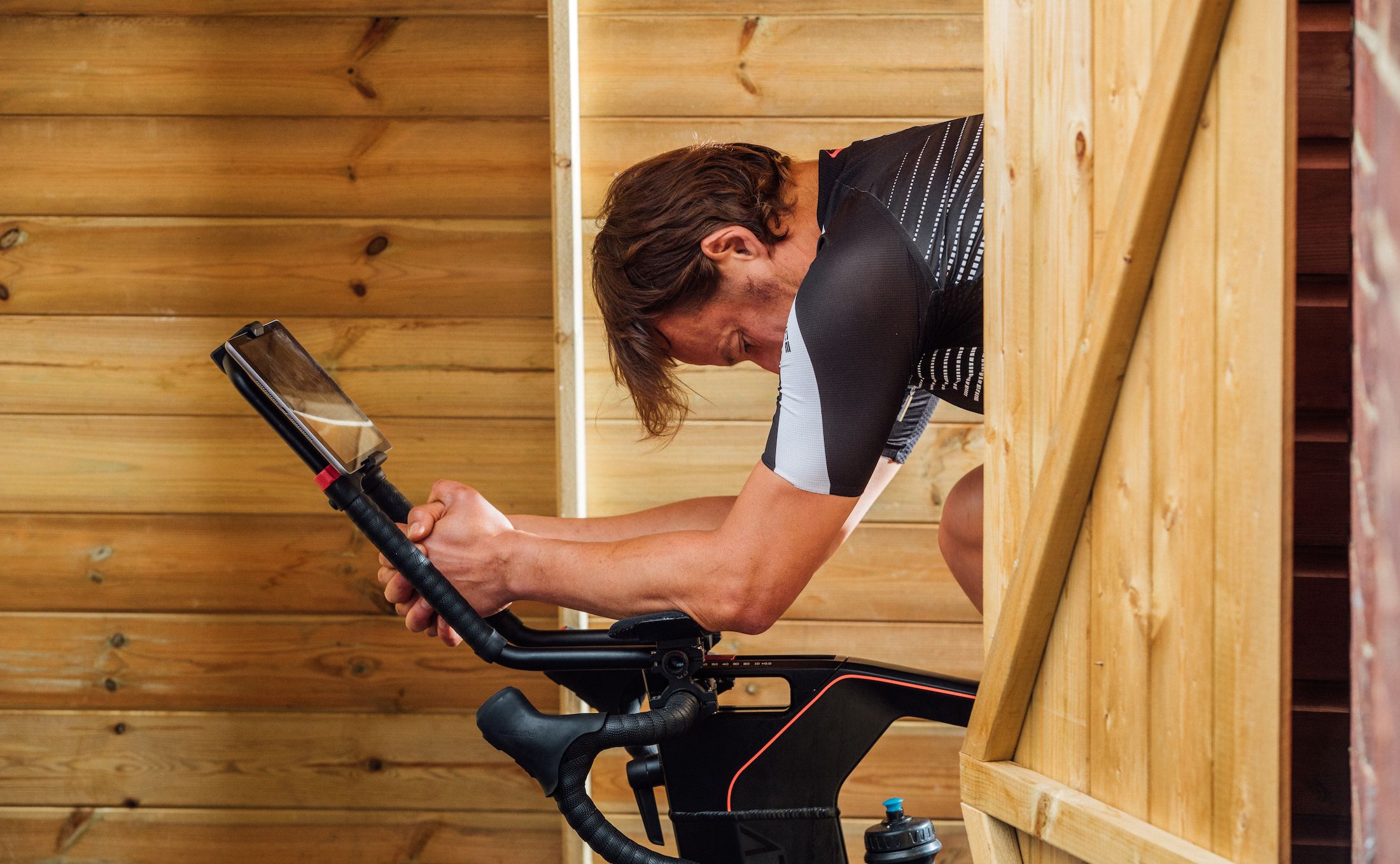
Best exercise bikes and smart indoor bikes for home workouts
Improve your warm-up, get your legs spinning or add cardio to your training with the best exercise bikes that are always ready to ride. All tested and rated by our team of experts
The latest race content, interviews, features, reviews and expert buying guides, direct to your inbox!
You are now subscribed
Your newsletter sign-up was successful
The best exercise bikes are an ideal way to maintain your fitness and complement the time you spend on the road. Even during spring and summer you can supplement your weekly rides with dedicated training sessions, with the exercise bike being a great option if you’re short on time.
Many of the models featured in the guide allow you to connect with the best indoor cycling training apps, allowing you to benefit from the support of the indoor cycling communtiites as well as a host of advanced training tools.
We’ve tested a wide range of bikes, from the basic to the more detailed, and have selected our favourites here. While the price tags vary greatly, all feature manual resistance. If you’re looking for automatic resistance, then we have a guide to the best indoor smart bikes for your perusal.
As you’ll see we’ve chosen the bikes across a number of categories with the aim of helping you find the best exercise bike for your needs and budget.

The EX-5s from Echelon truly goes toe-to-toe with Peloton experaince when nothing else in comes close. It is also a cheaper bike and offers better value monthly subs.

Both easy to set up and use, the Domyos exercise bike is ideally suited to those on a budget. It features a 12kg/26.4lbs flywheel and plenty of adjustability to help dial in the fit.

For riders who are looking to put the power down and have a reasonable level of self-motivation. Excellant levels of resistance adjustability keep it ahead of its competitors.

A budget-friendly option that could tempt dedicated cyclists with its excellant connectivity to third-party app platforms like Zwift and Strava.

Famed for its plethora of live classes, the Peloton bike is best suited to those who need help with structured workouts and training motivation. Requires a monthly subscription.

Developed for over a decade with some of the best cyclists and athletes around the world. The Air brings Wattbikes' renowned quality and high-intensity training platform into the home.
Load one more of the best exercise bikes

A simple, quiet, and smooth machine, the BikeErg has a lot to like. Its extremely light weight makes it ideal for those who need to move it around, and its low maintenance wind resistance should see it last forever.

Echelon offers more flexibility and access than Peloton
Our expert review:
One of the biggest blockers to me continuing my training indoors is the faff. Even when, like me, you are fortunate to have a bike setup all the time on one of the best indoor smart trainers. It's the tech aspect that drives me nuts, getting everything linked and then halfway through, your daughter needs the tablet to do her homework. Which is where a connected exercise bike appeals to me.
The bike itself is made from robust, welded steel. While this prevents rust and corrosion from sweat and sports drinks, it also makes the Echelon EX-5s heavy at 56.5 kg/124 lb. It would be remiss of me not to mention the assembly and setup of the Echelon EX-5s. As I mentioned, the 60kg mass takes some shifting, and putting the bike together requires a reasonable amount of effort and shouldn't be underestimated. Setting it up, ready to ride, is relatively simple in comparison, though most adjustments are tool-free, making swapping between riders nice and easy too.
For those who are not cyclists yet, the EX-5s is relatively comfortable for 45-minute to 1-hour sessions. However, for me, who is also at the lower end of the size range offered, I couldn't quite find the right position, while certainly not the worst I have experienced on an exercise, in fact very much one of the better ones - it is still not quite there with the Q-Factor (essentially, the gap between your legs when pedalling) being to wide and being a bit upright for my liking.
Once pedalling the bike feels very smooth, and the resistance felt adequate for most. I did find myself up to the 20s of 32 levels a couple of times. So, for bigger and more powerful riders hardest resistance will bottom out before you do. It is certainly going to make you huff and puff, though; it's certainly better than most in this area.
The digital interface is the key feature that distinguishes the EX-5s from others. There is a lot to discuss on the platform, so I encourage you to read my full review. However, overall, the system is fast, and the classes, while a bit kitsch and cheesy, are fun. Echelon's new OS platform, which is very similar to Zwift, needs a bit of work, but if you have zero experience with Zwift, this will feel like a whole new world.
Would I buy one myself? As a cyclist, unlikely, unless it was being shared with ours in my house. Would I encourage my family members who don't have confidence to ride outside or to have a gym membership? Absolutely yes.
Read my full Echelon EX-5s exercise bike review

Basic by name but certainly not in performance
Our expert review:
For newcomers to riding at home, the Domyos Basic Exercise bike can be the perfect place to get started. While reviews on the Decathlon house brand website say that it's no studio bike, many applaud its sturdiness and value for money. Arguably with less frequent use, this basic spin bike doesn't need to be quite as robust. This means the Domyos is slightly lighter and more transportable, allowing it to be wheeled out the way when not in use.
A 12kg flywheel uses a mechanically applied leather brake pad to create resistance for the user, in what the brand says is 'moderate-intensity use. A chain-driven drivetrain should recreate a smooth pedalling sensation, similar to that of a normal bike. The saddle height, saddle fore/aft and handlebar height can all be adjusted, similar to that of a regular gym spin bike. Making it easy and quick to find a comfortable position.
There isn't an online community or platform to join, which means you'll have to be self-motivated or find online classes to attend. The Domyos allows the freedom and flexibility of keeping fit with a little homemade spin class at a low cost.

Our expert review:
If you've ever undertaken a gym spin class, the chances are that you were riding a Schwinn. That background in gym bikes means very little technical know-how is required to get it set up and ready to ride. For those that may already own spin shoes, it even comes with secure clipless pedals (SPD) out of the box.
Formally, the IC8, this sturdy indoor trainer features a weighty flywheel that is unlikely to be overpowered by most riders. It's a direct-contact resistance system, with a staggering 100 levels to choose from, meaning you are in charge of your training at all times.
The added tablet/phone holder and a wide range of third-party connectivity options mean you can choose which virtual classes to join and enjoy.
The bike's location can be pretty flexible, thanks to mini roller wheels that facilitate transportation. But the weight unit will limit its general living place, and I wouldn't be keen on rolling it or riding it without the use of heavy-duty floor protection.
Read our full Schwinn 800IC Indoor Cycling Exercise Bike review

Our expert review:
Horizon Fitness offers an indoor exercise kit that costs under $1,000, with the 7.0 IC model including a Bluetooth heart rate monitor. Set-up isn't too laborious, although there's a limited range of adjustment and the saddle is rather hard.
The Horizon Fitness bike features pedals with SPD clips on one side and straps on the other, along with two water bottle holders. It doesn't take up too much space.
You get Bluetooth connectivity, so you can use a phone or tablet to join classes or rides online, and your speed and other metrics will be sent to the app, although you're still going to need to adjust the resistance manually. With a total of 100 levels, there's plenty of fine-resolution and high-end resistance available, and the transition between levels is smooth.
Read our full Horizon Fitness 7.0 IC Fitness Bike review

Peloton offers much more than just on-bike exercise, with a large community and all round fitness classes
Our expert review:
"Okay, Peloton, let's do this!" You have almost certainly seen the adverts for this on TV. The brand has been popping up everywhere, and even non-cyclists now know the word 'Peloton'. The American brand dominates the US market and has made inroads into the UK too.
The basic set-up (and membership) includes daily live-streamed classes, as well as 24-hour access to the virtual studio for an entire household. There are curated playlists for all genres, as well as instructors and coaches, and leaderboards to keep you motivated. There are even additional options that include strength, stretch and yoga classes.
It's cheaper than the Wahoo option, but nearly double that of the Echelon, arguably the most significant competitor. If you struggle to plan your own workouts and need motivational entertainment, the Peloton is a great option. There's even the option for individual profiles for household access, so perfect if you're looking for a shared home bike option.
If it all sounds like a tempting offer for virtual cycling, but you are still undecided, take a look at our helpful guide on Zwift vs Peloton: which is best for your at-home workouts?
Read our full Peloton indoor training bike review

Our expert review:
Developed for more than a decade, the Wattbike air resistance system is well-renowned among high-level athletes and fitness coaches. The Wattbike Pro and Trainer Air set the benchmark for those looking to incorporate high-intensity intervals into their training plans. The recently launched Wattbike Air aims to bring this technology into the homes of cyclists and fitness enthusiasts.
What do we know about the air resistance system? The commercial gym versions have huge peak power outputs, with the Pro & Trainer Air achieving 3500-3800 watts. These are the bikes you will have seen Sir Chris Hoy and Laura Kenny using for FTP and sprint efforts. The Air has a far more modest peak, but one that is still far higher than its competition, with potential for riders to try and push 2500 watts.
Air bikes are renowned for being extremely quiet and react nearly immediately to explosive efforts, with a smoothness that can only be achieved using this resistance method. As we found with the Atom Wattbikes, reputation for quality is high. Considering the top-level athletes that use either system every day, we have no doubt the Air would be a good addition to any home gym setup.

Our expert review:
Concept2 is a big name in gym equipment, with its rowing machines considered the gold standard, and this accuracy is carried over into the Concept2 BikeErg exercise bike. Its PM5 power meter measures a host of metrics to give repeatable values from its fan-based resistance unit.
There's no heavy flywheel or magnetic resistance unit here, so the Concept2 BikeErg is lighter than many of its competitors, and it doesn't require a power supply.
Setup was quick, and there's a wide range of tool-free adjustments for all contact points. Shorter or taller riders can purchase a seatpost of a different length to achieve a wider range of inside leg length. You can also swap out handlebars, saddle and pedals, although not the crank length.
On test, the belt drive and air resistance combine for a remarkably smooth and quiet ride. It's easy to do one of Concept2's sessions or to hook up to Zwift for more stimulation; a tablet mount is an extra, though.
On the downside, I found the power measurement to be somewhat inaccurate, although it was consistent in its inaccuracy, which means you just need to do a little maths. The real bugbear is that you need to reach down to the flywheel to alter resistance, rather than having a bar-mounted lever.
Read our full Concept 2 BikeErg review
There's a lot to consider if you're looking for the best exercise bike to meet your needs. You'll want to make sure that you've got all the functionality that you want before making what can be a significant outlay on an exercise bike for riding indoors.
Here's a cross-reference table for all the models listed above.
Connectivity
Weight
Resistance
Adjustment
Domyos Basic Exercise Bike 100
No
29kg
Friction
Manual
Echelon EX-5s
BLE/WiFi
56kg
Magnetic
Automatic/manual
Peloton
BLE/WiFi
61kg
Magnetic
Automatic/manual
Horizon Fitness 7.0 IC
BLE
39kg
Magnetic
Manual
Schwinn Fitness 800IC
BLE
48kg
Magnetic
Automatic/manual
Concept 2 BikeErg
BLE/ANT+
31kg
Air
Automatic/manual
Wattbike Air
ANT+, Bluetooth, FTMS
55kg
Air
Manual
Indoor training is now a central part of most cyclists' fitness regimes. Indoor training apps like Zwift make the experience much more interactive.
Even without the ability to link up to an app, you can get a lot out of indoor cycling. So, at Cycling Weekly, we see ourselves as dedicated indoor trainers and outdoor riders. Our team has used a wide range of exercise bikes and smart trainers and knows what to look for to maximise your fitness gains from riding indoors.
Our experience means you'll have a consistent, in-depth viewpoint reflected in our product scoring. You can find out more on our How We Test page.
The way we test each exercise bike depends on its categorisation. For the more basic units that lack connectivity, we are setting out a structure of sessions that best test the unit's stability, the unit's maximum resistance, and how smoothly it is delivered.
Of course, we are also checking the more basic features of units with connectivity or smart features. However, we are also cross-checking the data with power meters, the quality of that connectivity to third-party apps and devices, and particularly the speed at which these connections react and adjust resistance levels.
Where possible, we try to set similar session plans. However, different reviewers will be at different points in their fitness plans, so we are mindful that the plans are not always exact. We will always try to ensure that we complete basic sessions, including intervals, over-unders, cooldowns, recovery, sprints, and some race simulations. If classes and community-based workouts are included, we will attend these as well.

Dependant on the bikes features our team sweat away hours testing the best exercise bikes
Hannah will be the first to admit she much prefers riding outside, however, she is also realistic. Hannah is a working mom, that till recently homeschooled and raced on the weekends. So, what free time Hannah does get to train or herself has to be used wisely and when the Peak District weather has other ideas, Hannah is more then happy to turn to getting her time on a bike indoors.
Michelle, like Hannah, is also a hard-working mum of two, and also has to fit in training and time on the bike around family and work life. Which is why she regularly turns to home and indoor training, whether that is squeezing in half an hour during her lunch break or, with a baby monitor balanced on the handlebars, finding time when the kids are in bed.
Choosing one of the best exercise bikes, given their crossover with the best smart bikes and various other fitness platforms like Peloton, can become a bit confusing. What we are discussing here is exercise bikes, which are generally defined by the manual intervention required when adjusting the resistance. This is typically accomplished by a dial or handle located on the bike. If you are looking for something that is automatically controlled, you absolutely will want one of the best smart bikes.
So, how do you choose the best exercise bike for you?

At the heart of most indoor bikes is a weighted flywheel. Its job is to provide mass, which requires energy to establish rotational inertia. In other words, it is a weighted metal disk that takes the place of a bike wheel and is connected to the pedals via either a chain or a belt.
The flywheel stores kinetic energy, so once you’ve got the wheel turning, it will continue to do so, creating a very similar experience to outdoor pedalling.
A good flywheel typically takes force to get it spinning and force to stop it, as kinetic energy is a function of mass and speed. The larger the diameter and heavier the flywheel, the more energy is stored, and the flywheels that spin the fastest store much more energy than ones that spin faster (so keep spinning for longer on their own).
Without external slowing force, a flywheel would create a stop-and-go experience and would need to be very large or spun exceptionally fast to benefit fitness. Using brake pads or electromagnetic induction with magnets can significantly reduce the weight and size of a flywheel for better usability.
Direct-Contact resistance systems
A brake pad is simply applied alongside and on top of the flywheel to create friction which the rider needs to overcome.
The more pressure applied to the pad, the harder it becomes to keep the flywheel moving. It’s that simple.
The downside is, you’ll still require a pretty heavy and large flywheel; think typical gym spin bike, and much like brakes on a bike or a car, over time you’ll find that the brakes will need replacing. Depending on the quality and size of the flywheel, you may eventually find that it needs to be replaced too at some point.
They are also entirely mechanical, so will be noisier than electro-magnetic resistant bikes. So if it’s going to be living in the middle of your lounge, you might need to give advance warning of your impending exercise routine to the rest of the household.
The upside is that this level of simplicity keeps the price down. There are lots of online classes, both paid and free, to sign up to keep you motivated and working hard. These bikes also rarely require electricity, so great for keeping in an outbuilding or, even outside with a protective cover on when not in use.
Electro-Magnetic resistance systems
Recently these have become the pièce de résistance of exercise bikes. By passing an electrical current through magnets you can make the magnets more or less attractive to each other. The resistance in an electromagnetic exercise or smart bike is controlled by the level of electric current passing through the magnets that flank either side of the flywheel. More current equals more magnetic force, increasing the resistance, and making it harder for you to turn it.
The biggest benefit of the electromagnetic resistance system is that it can be controlled by the rider, by pushing a button, running pre-programmed software built into the bike or, with the correct connectivity, a remote third party, allowing for virtual riding on platforms such as Zwift or TrainerRoad.
Another benefit of the electromagnetic system is that because there is nothing in contact with the flywheel creating the resistance, you can significantly reduce its size and weight, making the whole package much smaller and lighter.
Other benefits include less wear and tear, as there are no brakes in contact with the flywheel and the working noise is also significantly reduced.
The downside as well as requiring a source of electricity, is the cost. The initial outlay will be a lot more expensive than a more basic mechanical direct contact resistance bike, and remote third-party virtual reality apps will require a subscription of some kind.
Air resistance systems
Air bikes use a flywheel system based on air to create the resistance and are increasingly popular in gyms since the advent of Crossfit/ Functional fitness and their HIIT style exercises.
Fan like blades are driven by a simple cog and chain/ belt and require the rider’s energy, mostly by co-joined pedal arm levers to turn. The harder you ride, the more resistance the blades meet from air, making you expend more energy.
If you want to cover a set distance or calorie count quickly, you’ll have to push the blades through the air quickly - which requires more force to move air molecules quicker, think of putting your hand out of a moving car window and the force of the wind at low and high speeds.
90% of air bikes will have arms and legs and as the resistance comes from the spinning blade, there’s often no variability.
The upside is that along with getting a full body workout, there’s no need for electricity (other than a new battery once in a while for a head unit display) so it can be located anywhere, another ideal option for the shed or outside under a protective cover.
The downside is that out of all three options, this is by far the noisiest with the harder you work the louder the fan like sound, certainly not household friendly.
The price difference for exercise bikes ranges from $150/£100 for basic models to nearly $3,000/£2,500 for high-end options, often requiring a monthly subscription for full benefits.
Interactive, Wi-Fi-enabled exercise bikes offer a good compromise. They allow users to take online classes for motivational workouts from the comfort of their homes. Although initial costs may be lower than those of smart bikes, monthly subscriptions can increase overall expenses.
An entry-level model is sufficient to get you started; spending more provides features like ANT+ and Bluetooth connectivity for use with apps like Zwift or Rouvy.
Cycling offers many benefits, and indoor riding is no exception. It enhances mental health, boosts immunity, and aids weight loss; why not check out our 15 benefits to cycling guide?
The main advantage of an exercise bike is the control it offers over pace and duration, which allows you to tailor your fitness journey to your needs. For those investing in an exercise bike for weight loss, our quick guide outlines six essential tips for success.
The main difference between the two is the functionality. The systems vary hugely in terms of performance, and the more you spend, the more you’ll get.
Generally speaking, an exercise bike, or spin bike, will provide manually adjustable resistance, have some basic performance data, and a more upright sitting position.
A smart bike is more interactive, and, along with automatically controlling resistance for you, it will also allow you to attend virtual rides, gather significant performance data, and have a riding position that more closely mimics that of a road bike, providing a realistic road-like feel when pedalling.
In the middle is an ever-growing market that combines both smart features and connectivity with the simplicity of basic exercise bikes. We also see a rising trend in air-resistance bikes.
The Peloton indoor exercise bike and app have taken the fitness world by storm, but is it any good for training for proper cyclists?
We've got all the insider detail on the question of is the Peloton indoor exercise bike and app worth it on our dedicated page; but in summary:
You'll need to purchase the bike and then subscribe to a membership monthly fee, a bit like a gym, but it does allow you to include multiple members.
The subscription bit gives you access to instructor-led classes, which resemble 'spin classes' and a motivational virtual community, as well as off bike exercises such as Yoga, stretching and strength workouts. So it's a bit like a mini home gym structured around the bike.
While Peloton might still have the market share, there are a lot more options out there if an interactive smart bike is your thing. We've picked out what we think are the best Peloton alternatives to help you find the right bike to achieve your fitness goals.
When it comes to performance training and riding indoors, turbo trainers have traditionally been the way to go. However, with the advent of smart bikes and more coming on the market constantly, some riders have referred to them as game changers for full-gas efforts and harnessing every inch of power due to their solidity. Then there's the reduction in maintenance and the bike always being ready to ride.
However, on the flip side, the compliance offered by a road bike attached to a turbo trainer does have its benefits on longer rides at home. The ability to stow a turbo neatly away, along with the obvious price differences, will be more of a perk for some riders.
Read more on our Smart bike or top-end turbo: what's the ultimate set-up for Zwift racing feature to see what two distinguished online racers think.
If space is limited at home, you might be tempted to buy an exercise bike that folds up and rolls away. However, this will always mean some big compromises in terms of performance, most notably rider position and limited tension settings.
A typical foldaway exercise bike uses an ‘X’ frame, similar to an ironing board, to keep its overall footprint low. To keep this dual triangle relatively strong, it must be as vertical as possible, meaning that you're likely to be sitting very upright.
The other obvious disadvantage of foldaway exercise bikes is that, to keep the machine as portable as possible, they will naturally have lighter, much smaller flywheels, significantly reducing their ability to apply resistance.
Clearly, they have their place for people with limited space and looking for a low-impact cardio workout at home. For experienced cyclists, it is certainly worth considering some of the best rollers or smart turbo trainers instead.
The short answer is no: all the exercise bikes in this guide will work perfectly well as basic exercise bikes without requiring a subscription, joining a community, or following a structured workout plan. However, your need for connectivity could help to narrow down what kinda of bike you are looking for. If you aren't interested in racing, classes, or joining others, you could look at some of the simpler units, such as the Domyos or Schwinn and save yourself some money.
Even those that offer their own in-house services like Echelon and Hoizon Fitness, you could opt to use one of the best indoor training apps instead, like Zwift, Rouvy or My Whoosh.
Cadence
This refers to how fast your legs are pedalling and is measured in revolutions per minute (RPM). Some exercise bikes have the ability to measure your cadence and are shown in RPMs on the console screen.
Connectivity
The ability to connect, typically via Bluetooth or ANT+, to a third party app allows you to join virtual classes, rides and training programmes. This is a feature of all of the more expensive smart bikes, but isn’t always an option on cheaper machines.
ERG mode
Ergometer mode, or ERG for short, is a feature of some smart exercise bikes. It allows the resistance to be automatically adjusted, pre-set to an average power in watts, based on your cadence and eliminates the need to ‘change gear’ while riding.
Power
By combining the resistance level (see below) and your cadence, a bike equipped with a power meter can measure your energy output. It’s shown in watts and can be used as a metric for training sessions.
Friction resistance
Cheaper bikes use friction, with a pad applied to the flywheel via an adjustable knob. By turning the knob in either direction the level of resistance moves either up or down. Because the pad is acting as a brake, it can create some noise. The pads also require replacing.
Magnetic resistance
Here magnets are moved nearer or further away from the flywheel via an electric current, without actually contacting it. It results, generally, in a quieter ride than a bike using a contact pad but does require a power source for the electro-magnets to work.
Air resistance
More expensive bikes might use air resistance. Here the flywheel is replaced with a fan, with the blades pushing against the air to create resistance; in essence the faster you pedal, the more resistance you’ll face. This system is a good match for interval and sprint training.
Q-factor
Q-factor is the lateral distance between the outside edges of the two crank arms and with regards to exercise bikes will determine the gap between your legs while pedalling.