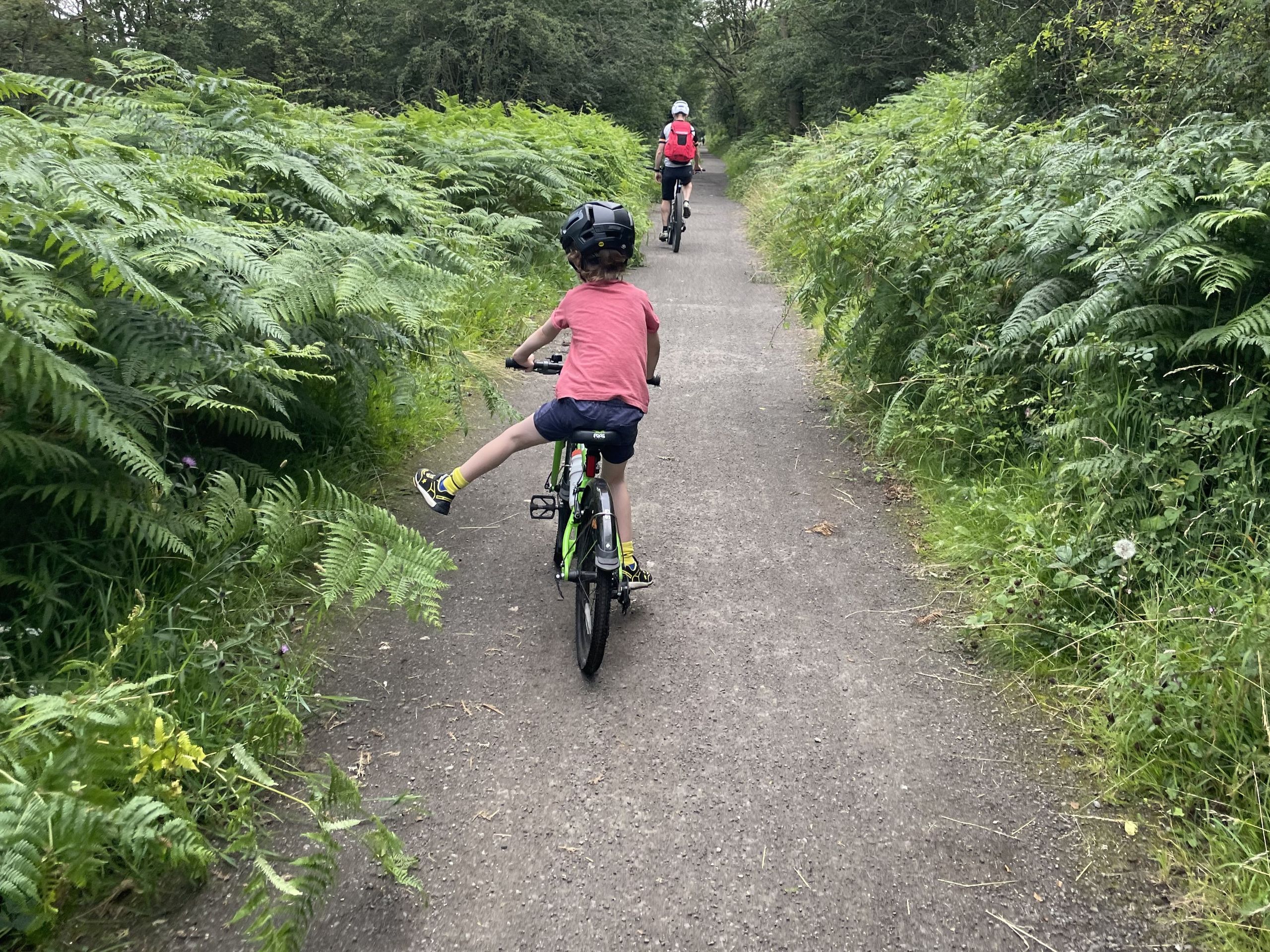
Find the perfect bike for your budding young bike rider, with reviews that cover all ages and wheel sizes, from 12 to 24 inches and 2 to 11 years old
Selecting the right bike for your child will go a long way to making their early cycling experiences enjoyable. While learning to ride naturally comes with its frustrations, the best kids bikes are designed to aid the process, breeding confidence, promoting independence and sowing the seeds for a life on two wheels.
We have many parents as part of the Cycling Weekly team, including myself, who also spent time as a kids’ bike designer. For many kids, their journey into cycling begins with one of the best balance bikes. We have tested bikes with wheels ranging from 12 inches, with no pedals, to 24 inches, which is typically when most kids graduate to a small or extra-small adult bike.
Since we can’t ride these bikes ourselves, we use our kids as testers, leveraging our riding experience to observe how they interact with the bikes. Through these observations, we can narrow down what makes a kid’s bike good and what doesn’t. We occasionally receive feedback directly from our kids, but you know what they say: never work with children and animals. Essentially, they do the riding, and we do what we do best, writing.
If you are considering one of the best kids’ bikes, make sure to check out our guide to the best kids’ bike helmets afterwards.

Wide tires make for a smooth ride with the Hornit Airo
Our expert review:
Reviewed by Simon Richardson - CW Editor
At 2.95kg, my child found this bike easy to get to grips with, and I was impressed with the light steering, as well as the saddle and thick tyres, which made for a comfortable early ride experience. She wanted to ride it straight away, so it won that early battle - and being easy to get on with, it quickly became a cherished toy.
The Airo was easy to assemble, though adjustments do need an Allen key, and we did find that the paint scratched quite easily. Otherwise, it was perfect.

Our expert review:
Reviewed by Rachel Sokal - CW tech contributor
It is easy to dismiss the more expensive kids' bikes, as it is often hard to see their value visually. However, seeing a small child jump onto their first pedal bike and ride it almost immediately is such a joy, for them and me; it only makes me wish, as a Bikeability instructor, that more kids had access to these quality bikes.
As far as I am aware, the Frog 38 is the smallest-framed pedal bike on the market. Although it has 14-inch wheels, its frame is smaller than even many of the best balance bikes, making it the perfect transition from scooting to pedalling. Despite this mini sizing, the 38 boasts all the kid-specific features that Frog Bikes has become well-known for, such as short reach brake levers and short cranks. At just 6.1 kg, it is incredibly lightweight, making it easy for kids to pedal and for parents to carry.
To help with the transition, I even removed the pedals to help get a feel for the bike, its handling, and, most importantly, the newly introduced brakes, which many balance bikes still don’t feature. Which, much to my delight, we are all picked up pretty rapidly.

Our expert review:
Reviewed by Matt Ischt-Barnard - CW Ecomm Writer
The latest edition of the Early Rider Seeker benefits from several updates, most notably a few tweaks to the geometry. The bottom bracket is now lower, the head tube angle is slacker, and the seat tube is shorter, reducing the standover height by 40mm. The changes have been made to improve stability and I have seen a marked improvement in my son’s confidence since he began to ride the Seeker; where once he might have got off the bike and pushed, he’s now enjoying tackling more technical stretches of our local bike path.
The Seeker’s lightweight construction has also helped. At just 6.5kg/14.3lbs it’s lighter than my son’s previous bike by 1kg/2.2lbs. As a result he’s able to better deal with small inclines and just appears to be more comfortable in general as he moves the bike around.
Noteworthy details include hydraulic disc brakes, sealed bearings in the bottom bracket and wheels, and mounts for a bottle cage. Combined they help give the bike greater longevity, making it better suited to longer rides as your child’s confidence grows, as well ensuring that it can be handed down to a younger sibling when required.
It’s hard to fault the Seeker, even the price tag can be justified thanks to the aforementioned lightweight build and quality components, confirming Early Rider’s position as one of the best manufacturers of children’s bikes.

Our expert review:
Reviewed by Simon Richardson - CW editor
The best kids bikes should be able to accommodate a growing child and the Ridgeback Dimension 20 largely achieves this. The dropped top tube delivers more standover height than a traditional frame, which enabled my son to ride the bike when otherwise it might have been a little too big for him. The seatpost provides 14cm of vertical movement, easily done using a 6mm hex key, which should cover a couple of years of growth. Sadly there’s little front end adjustment on offer, with 22mm of spacers under the stem all you have to play with; if you need to extend the reach as your child grows then you’ll have to swap out the stem for a longer version.
All of the bike’s components functioned well, but the aluminium V-brakes did require some work to get them to work as they should. If you’re an able home mechanic this shouldn’t be an issue but it certainly requires mentioning.
The tyres are standout. Both the width and tread profile inspire confidence and work well across a range of terrain. The handlebar grips proved comfortable, while the brake levers are adjustable to help with the reach; I found that I could have done with a little more adjustment here but it will depend on the size of your child’s hands.
Stepping up to a 20” wheel bike will likely mean an ‘open’ drivechain, rather than the enclosed versions you see on most smaller kids bikes. Fortunately the Dimension 20 has a plastic guard on the chainring, which makes it safer and less messy; there’s also a guard for the Shimano rear mech, which protects it when it’s laid down on the ground, or worse still, dropped! The seven gears are controlled by paddle shifters, which will likely take some getting used to, but does work effectively after some practice.

Our expert review:
Reviewed by Josh Ross - CW Tech contributor
The most noticeable part of the Woom Off AIR 5 is the geometry. Comparing it to another 24" wheel bike, the wheelbase is almost 2" longer, which should give a lovely, stable ride for novices like my son. There's also that big kink in the top tube, which makes for a low standover height on what is otherwise a pretty large-framed bike. I think this is primarily because of the increase in ‘stack’ or height at the front from the suspension fork. To which, the suspension offers a lot of adjustment for a kids' bike, not only with air depending on their weight, but also other simple but effective things useful to kids, like rebound, which is the speed at which the fork returns to you.
Despite so much being new to him, the bike, riding off-road, suspension, the bike disappeared underneath him. He didn’t mention the bike once, which I am taking as a good thing, as it clearly wasnt troubling him, and this is a boy who gets nervous from time to time on bike paths if they get too steep. He was hitting rocky terrain with ease, and loving it, not much more you can ask for from a bike, really.
Let's address the elephant in the room: Woom Bikes (pronounced more like Vroom than Womb) are expensive. However, for inspiring kids to ride, and the fact that they seem to hold their resale value very well, it's worth the investment, for me anyway.

Our expert review:
Reviewed by Simon Richardson - CW Editor
The Woom 3 provides simplicity and reliability for youngsters just getting going on a pedal bike.
Wide tyres make for a comfortable ride and versatility across all terrains, and the fully enclosed chain helps keep clothes and fingers out of the gears. It's adjustable and simple to maintain - and is one of the lighter 16" options.
Riding wise, there was never a complaint and my daughter was always keen to ride it. She tackled both smoother tarmac surfaces, and some rougher trails and grass, and both her and the bike coped without issue.
In part this is thanks to the bigger wheels that simply roll better over the terrain, but perhaps also down to some of the little details that add up and make this bike easier to ride.

Our expert review:
Reviewed by Simon Richardson - CW Editor
The Woom 4 is yet another great bike from the Austrian kids' bike brand. Having previously tested the Woom 3, my daughter was making the jump to gears for the first time. Really, it is very hard to pick between the Woom 4 and the Frog 53, as they are very similar in price and specifications, and both are well-designed for short-limbed riders.
The main difference is that Frog uses trigger shifters, while Woom has selected a grip shifter; both approaches have their own advantages. As I mentioned above, Frog chose a trigger for their ease of use and to help kids maintain a good grip on the bar. Woom, on the other hand, went with a Shimano Revoshift grip shifter, known for its extremely light action. During my observations of my daughter, the lighter action of a gripshift seems more straightforward to understand and less of a blocker to getting used to gears.
Overall, the Woom 4 isn’t all that different from the three and the other bikes in their range. Lots of high-quality kids' specific design, with a ton of adjustability. The similarity between the two bikes certainly helped my daughter's transition; just the fact that they looked the same removed a barrier, despite the jump to gears, for sure.
The tyres are incredibly knobbly for road use, even around the park or on fire roads. If you plan to head off-road, they are perfect.

Our expert review:
Reviewed by Matt Ischt-Barnard - CW Ecomm Writer
After nearly a year of use, my son has gone from his first time turning the pedals to a complete hooligan who skids at every opportunity he gets. That is largely down to how the Prevelo Zulu One handles and how the rider sits on the bike. Just like the Prevelo Balance Bike we had on test, it follows the same design principles, with a low bottom bracket and a higher front end, resulting in a balanced and comfortable platform.
However, despite being a largely brilliant bike, it has a specific use case, which is riding off-road and that ultimately adds to its bulk because of the overall build and specifications choice Prevelo have made. Had I been a little less of a magpie when choosing his first proper pedal bike, I might have chosen something a little lighter. As I mentioned, while the geometry has helped him hone his riding and prepare for off-road riding, it has also hindered his progress. That extra weight made getting started a big hurdle, and any incline was a no-go for much of this year. While we don’t push him hard, and have supported and encouraged him, he was showing frustration that he wasn't progressing.
As the first steps into pedalling the Zulu One might not have been the best choice; However, now he is building a bit of strength, he is a bit taller and has got the handling, it's coming into its own. While we aren’t yet on full singletrack, we have progressed to some pretty bumpy fire roads and are developing vital skills, like standing up and confidently leaning the bike on lower-grip surfaces. So, as we head into winter and the new year, I think some proper trails are on the horizon, and as a mountain biker myself, I couldn’t be more pumped.

Our expert review:
Reviewed by Josh Ross - CW Tech contributor
Sitting entirely in a category of its own, the Woom Now 6 is a truly great bike, and in this shown they really understand the needs of children when it comes to cycling. The Now 6 is part of a three-bike range designed not just to get kids riding in general, but to get them thinking about using it as transportation.
You'll notice one highly distinct design feature of the Woom Now, and thats the staggered wheel sizes: a smaller wheel on the front, then the back. It is a concept commonly found on the best electric cargo bikes, bringing the wheel closer to the handlebar plane and, in turn, keeping steering quick when the front wheel is loaded with stuff. A similar concept is used in the design of Brompton bikes, in their use of small wheels. What this does overall is stop kids from having to carry a backpack or parents from having to budge some kinda of pannier rack and bag on the back, which can unsettle the handling and give a feeling of instability.
The surprise of the Woom Now, though, was not its serious cargo capacity. It's just how comfortable my son looked on it and the confidence he showed riding on the highway. This can largely be attributed to the very upright position and the very stable geometry. It's also in the details like the lights, he feels more seen, and it saves me a job having to remember to change them for him; the dynamo means they are always there. There are also many wider uses for it than just the school run or helping dad at the supermarket. Take it camping, and they can help collect some firewood or carry a sleeping bag and some snacks, or go on a short bikepacking trip.
It's new, it's a different way of looking at kids' bikes, and because of that, it's also pretty pricey, at nearly $900. However, it opens up a different way to use bikes, that isn’t fitness or as recreation, it could become part of your everyday, especially when, like me, it is part of my everyday already, and I hope my kids want to be part of that one day.
Testing is done a little differently when we put the best kids' bikes to the test here at Cycling Weekly. Normally, we would pore over the details and discuss our experiences in depth after hundreds of miles and kilometres of structured and intense testing.
However, when testing the best kids' bikes, we aren't the ones putting in the time. That's down to the sometimes-willing, sometimes-unwilling children of the Cycling Weekly team and contributors. It gives us a chance to take a step back and observe. We are focusing on how the kids interact with the bikes and products across a variety of scenarios and taking a more easygoing, as-it-happens approach to testing. Then it's still up to mums and dads, obviously, to craft it into something other parents can digest.
We will always ask our mini me's for their feedback, but you know what they say: never work with kids and animals. However, if we stuck to that hard-and-fast rule, we fear many of the CW team wouldn't have jobs!
My son is 4 nearly 5 and absolutely loving his biking journey. He took to it very early pushing around his balance bike at just 18 months. At 3 and half we progressed to pedals and we are now on the path to off-road biking this winter. Our favourite place to ride is the local pumptrack and disused railway bike path.
While I have taken my cycling very seriously in the past, I try to make it as fun as possible for my sons. Bike riding is a part of almost everything we do, in the hope that I am instilling it not just as a sport, but as something that can take you places and do things. We love to go on scavenger hunts, go foraging, play games, ride to school, and get ice cream on a warm day.
Like Rachel, Simon, having taken his cycling very seriously, has never put any pressure on his kids to ride bikes, but both have enjoyed the occasional leisure ride. A big part of the Richardson family's cycling is their school commute, which they take together on their new cargo bike.
Michelle's daughters still have a bit of growing to do. She has one making progress on her balance bike and one who will be hauled around by my mum and dad in a range of the best kids' bike seats and trailers shortly.
There are a number of criteria that should be looked at when you’re shopping for a kids bike. Here are our key considerations:
Size
It’s hard for your child to gain confidence on their bike if it doesn’t fit them. A bike that’s too big will be difficult for them to control. To promote confidence they’ll want to be able to place their feet on the ground comfortably. An upright riding position helps them to see what’s around them more effectively. Buy a bike for them to ‘grow into’ and both of these will be difficult to achieve. Similarly, a bike that’s too small presents problems.
Weight
Heavy bikes can hamper your child's enjoyment. They are harder to cycle in general, and especially when faced with anything close to a hill. A heavy bike is also more difficult to maneuver and to push. Look for a lightweight aluminium frame to help keep the weight down.
Adjustment
While it’s crucial not to buy a bike that’s too big, it’s sensible to choose one that can accommodate a little growth. Look for an adjustable seatpost and perhaps even a stem that can be adjusted for length.
Versatility
It’s common for a child to learn to cycle off-road. It’s also likely that once they are riding with confidence you’ll want to enjoy a variety of rides with them, from tow paths to bike trails and more. Choosing a bike that can handle different terrain adds to their enjoyment, while a versatile bike will also likely have more longevity, making it better value as a result. Look for wider tyres, with a tread pattern that’s neither too aggressive, therefore slow on tarmac, or too smooth, which can struggle off-road. Other features that can make it more versatile include gears and disc brakes.
Budget
If you have a generous budget then you’ll be able to opt for a bike with a lightweight frame as well as better components, including hydraulic disc brakes and a drivechain from a reputable brand such as Shimano. If your budget is a little tighter then you’ll likely have to make a few compromises; functional brakes are vital and a lighter frameset will go a long way to keeping the overall weight down.
Pay attention to weight: heavy kids' bikes represent a large percentage of the child's weight (see table below for weights on recommended bikes)
Don't buy a bike for a child to 'grow into': it'll gather dust - quality kids' bikes hold their value in resale anyway
Look for bikes with gear and brake levers that are child-specific, smaller and easier to use
Avoid multiple gears: double chainrings (front gears) add weight and complication
Avoid suspension until pre-teen years: it adds weight and they often aren't heavy enough in the upper body to use it
Remember to leave some cash for a kids' bike helmet
There are two ways to shop for a kid's bike; age or wheel size.
We've broken our best kids' bikes buyer guide into age categories, but remember this is worked out on average heights and leg measurements, so we've also included a handy quick link table to help find the right size category by wheel size too.
It's important to recognise that every child is different, especially in terms of height and development. Our age categorisation is just to help you find the right ballpark, for the average journey, but remember, only move to the next stage when your little one's legs are ready.
For children younger than three, check out our page on the best balance bikes for further recommendations. These are excellent starter bikes that help children learn the skills of cycling before they're ready to pedal. Some models have sizes up to adults; you're never too old to learn to ride a bike.
Age (years)
Wheel size (inches)
Height (feet / cm)
Inseam (inches/ cm)
18mtns +
12”
2’10 - 3’4ft / 86 - 101cm
14 - 17” / 35 - 43cm
3+
14”
3’0 -3’3ft / 92 - 98cm
13.4” - 14.7” / 34 - 38cm
4+
16”
3’5ft/ 104cm
16.5” / 42cm
4-6
20”
3’7 - 3’11f t/ 110 - 120cm
18.5 - 20.5”/ 47 - 52cm
7+
24“
4’2ft / 127cm
22.4” / 57cm
8+
26”
4’5ft / 135cm
24.4” / 62cm
10+
27”
4’9ft + / 146cm+
26.7” + / 68cm +
These are the pitfalls we see all too often
Don't buy a bike which is too large in the expectation that a child will grow into it. They will have a nervous time until they do
Don't get a bike which is too heavy for a child to enjoy riding
Try not to buy a bike without the flexibility for different types of riding
Don't only consider the up-front cost of the bike; longevity and resale value are important too
Like most things in life, you get what you pay for with the best kids' bikes.
The best kids' bike will also be one that your child can handle on their own, and unless you grab a bargain of a deal price-wise, in general, the cheaper the bike the heavier it will be. So always aim to get the best you can afford.
It's also worth bearing in mind that although the best kids' bikes can seem pricey, especially as children grow out of them - they hold their value. So even once your tribe has earned its riding stripes with a mini bike, you can sell it for not a lot less than you paid on sites like eBay, or grab one from there in the first place, or even take advantage of one of our quick link deals.
The options above are perhaps not the cheapest kids' bikes, and though lightweight bikes with ergonomic touch points will offer the best entry point into cycling, we realise they're not affordable for everyone.
Shopping in the sales can get you a much better bike for the budget you have, as will checking auction sites such as eBay. It's much better to take the best kids' bikes with a few scuffs and scratches over something not as good but looking shiny. After one ride on the best kid's bike, you'll all totally overlook any superficial marks for the superior riding experience.
If you are looking for a child's bike that isn't too expensive, try to keep it simple - suspension and lots of gears may be appealing to little ones, especially if they have seen your bike, but their enjoyment and confidence will be better bolstered by a lightweight construction. In most cases they won't need suspension until they're ready to ride an adult bike anyway due to their light body weight. While a few gears are handy, they can sometimes prove more complicated than expected, so perhaps stick to a single chainring at the front for as long as possible.
As mentioned above, cheap kids' bikes will often have several flaws, most notably their weight. When cutting costs, brands will have to use heavier components and the frame will often weigh more too - creating an overall mass that often represents a significant percentage of the child's, which is why many don't make our best kids' bikes guide.
Parents sometimes struggle to understand why every incline results in an outbreak of the waterworks - but we'd be crying too if our bikes weighed half as much as us.
Some children want a bike that looks just like an adult version - and if they're aspiring to look like an adult mountain biker, things can get tricky. It's common to see children's bikes with suspension forks, but most manufacturers of the best kids' bikes don't provide this until children are at least eight years old.
This is because a young child's upper body mass is low and they're rarely able to get the most from even finely tuned, responsive forks - and suspension will always add to the overall weight of the bike.
When it comes to gears - these should be introduced gradually. Most of the best kids' bike brands opt for single chainrings, with a wide spread at the rear cassette. For learners, this makes the whole process easier - and for older children, even those on racing road bikes, the single chainring helps to keep the weight down.
The best kids' bikes will have optimum kids' geometry. Reach is the first thing to consider. With longer legs relative to their torso, and musculature that doesn’t allow them to lean forward as an adult would, a shorter reach is a must. As a minimum requirement, the best kids' bikes will have a proportionately shorter top tube and a short stem.
The best drop bar kids' bikes on the market will also come with custom-designed bars with a short reach and drop to maintain a comfortable riding position. Specialist kid's bike brands like Frog also use custom-made brake levers with a shorter reach and greater leverage for smaller hands with a less powerful grip.
Foot placement is equally important, and getting that right for narrower hips calls for additional bespoke components.
To create a closer foot placement, the best kids' bike companies will design their own bespoke narrow bottom brackets with cranks in multiple lengths. This has the added benefit of improving ground clearance when the bike leans over, while also making it easier for the child to put their foot down.
Some brands will offer separate models for boys and girls. However, anthropometric data showed no significant differences between the measurements of boys' and girls' limbs.
Later in life, some women might choose to opt for female specific bikes, but at a young age this isn't deemed necessary by most experts, or most of the best kids' bike brands.
Liv bikes, the sister company of Giant bikes, is a women's only brand and therefore does cater just for girls, with options ranging from first balance bikes all the way up to 26" mountain bikes.
Most children will want a bike they find aesthetically suited to their tastes, so most of the best kids' bikes will come in a range of paint jobs to suit the tastes of young riders, both male and female.

Kids' bikes need to fit if you don't want them to gather dust. Photo: Chris Catchpole
While Junior Road has seen a decline in recent years, cyclocross racing is still a big deal - and of course, having the right bike for the job will help to spur on your child's enthusiasm. Versatility is key; many have enough clearance for mudguards, racks, and cyclocross tyres. Brands like Hoy Bikes, Frog Bikes and Giant/Liv all offer models in their ranges, with the former likely now only available secondhand.
For those nearing adult bike sizes, it can be slim pickings; however, the Giant/Liv Seek, while a bit pricey, is an all-in-one adult bike with a smart design for smaller frames.
For those kids who want to enjoy a little rough and tumble through the woods, then a proper kids' mountain bike might be on the cards. Knobbly tyres that will provide plenty of traction are available from the starter bike category - but it's only at the 24 inch wheel size for kids over eight that you'll start to see front suspension. This should be tuned for a lighter rider, although note our comments above about weight and complexity.
It can be tempting to add stabilisers to a child's bike. There are pros and cons and, for some children, a bike with stabilisers can enable them to experience the joy of riding that a bike without wouldn't allow.
On the other hand, stabilisers mean that the bike handles differently from a normal bike, particularly when turning, so once they're removed, your child needs to learn balance skills and how a non-stabilised bike handles. Modern thinking is that it's better to start off with a balance bike so they can get the bike's handling dialled, then add pedalling. You can find balance bikes for older kids, not just infants.
We've looked in-depth at the balance bike or stabilisers question, to help you decide on what's best for your child.