Best cycling overshoes 2026: Expert-tested for toasty toes in fall and winter
Our experts have picked 6 of the best winter cycling booties which will actually keep your feet warm and keep you riding even in the harshest weather
It’s essential to keep your extremities warm on the bike to enjoy longer, more comfortable autumn and winter rides. And when it comes to your feet, the best cycling overshoes are what make the difference.
For something relatively simple, overshoes are often poorly executed, with poor ergonomics or subpar construction. It's in the combination of materials that things tend to come apart at the seams, where manufacturers have to marry fleece, durable outer layers, and DWR coatings.
That's why our experts have identified which overshoes stand out, based, of course, on performance but largely on their durability, including our best overall, the Dexshell Heavy Duty Overshoes, which are clearly superior in both ergonomics and protection. If you often struggle to keep your extremities warm, be sure to also check out our experts' guide to the best winter gloves and just like your core why not try layering, with some of the best cycling socks.
Our expert review:
Reviewed by Emma Silversides - Tech Contributor
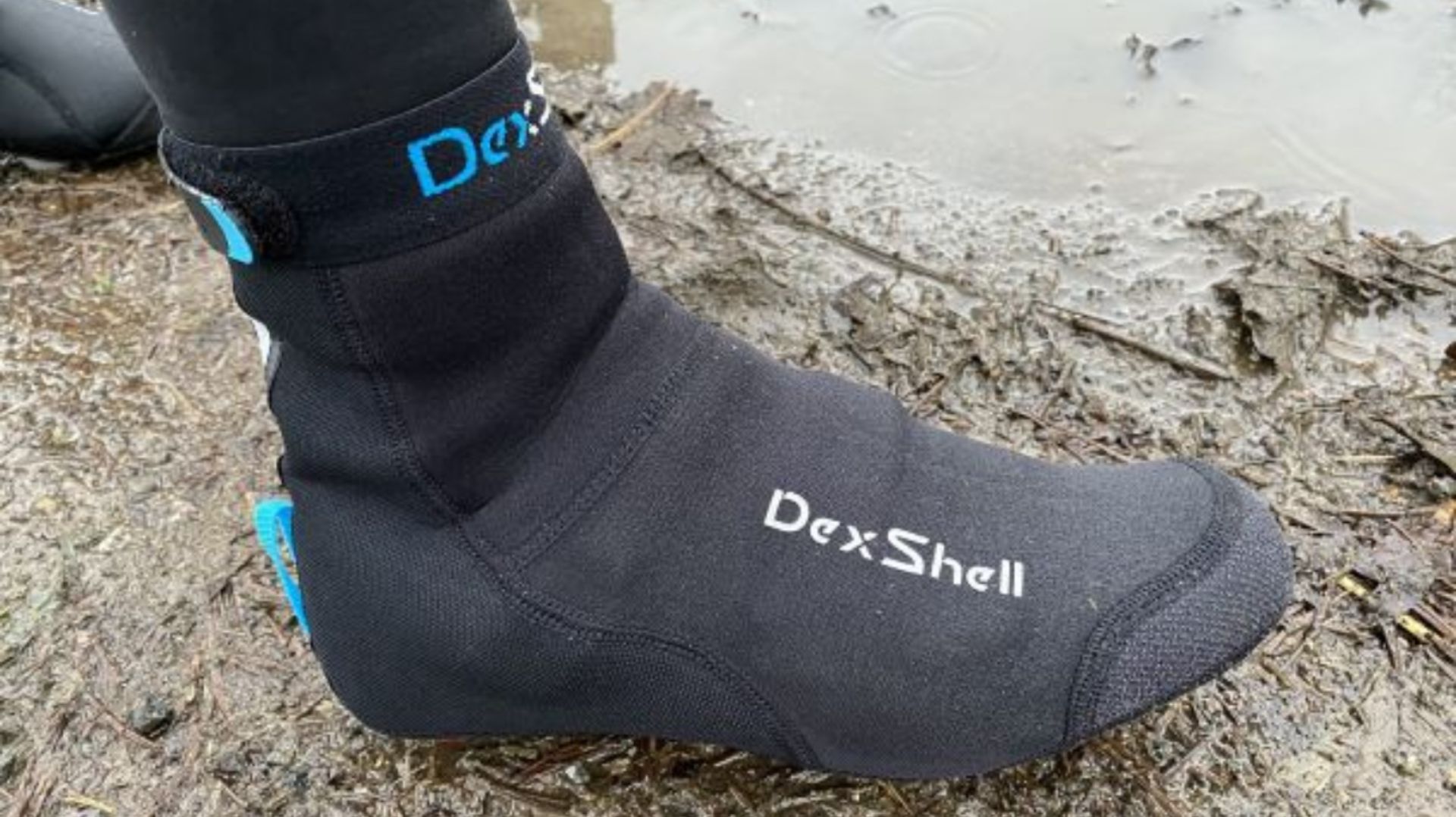
We were very impressed with these overshoes. They were warm, easy to put on, well-fitting, windproof and water resistant—basically all the points you want in an overshoe. Not only that, but the price is extremely competitive. With no discernible negatives, it was easy to give these a full 10/10, or five stars I should say.
A full-length waterproof zip at the back made getting them on and off a breeze. The zipper is secured by a tab at the top to stop it from slipping down at an inopportune moment. Another nice touch is the elasticated cuff with an internal silicone gripper, which helps to secure the overshoes in place.

Our expert review:
Reviewed by Chris Marshall-Bell - Tech, News and Features Contributor
The Gorewear Thermo overshoes are a really great pair of winter overshoes. During our testing, they rebuffed the wind, repelled water and vitally they kept the intense cold at bay. What's more, if the mercury rises and the thermal layers aren't a necessity, the feet do not overheat.
They are incredibly visible thanks to the bright neon yellow colourway, although there is a lack of reflective strips. We did find the overshoes quite difficult to put on and off, although this does result in a nice snug fit .
Roughly the same price as its competitors, these are brilliant winter overshoes for those riding in at or near to freezing conditions where the heavens might open at any moment.

Our expert review:
Reviewed by Tom Epton - Tech Contributor
The Endura Freezing Point II overshoes are constructed with a neoprene outer – which has been given a waterproof coating – and is fleece lined on the inside all the way down to where the upper of your shoe meets the sole. The upshot of this is a warm overshoe that will keep you dry in the toughest conditions.
In addition to the testing out on the roads, we 'stress-tested' these overshoes in a five-minute shower, expecting the heavy flow to overwhelm them. Instead, we were surprised to find that our shoes were only slightly damp while our feet were completely dry – most impressive, as this was far more water than the shoes experienced in more typical rainy conditions. In all, these overshoes are excellent, the only slight issue is that the ankle cuff is cut slightly low.

Our expert review:
Reviewed by Emma Silversides - Tech Contributor
Made of 2.5mm neoprene, we found that the Altura Thermostretch Windproof overshoes did a good job of keeping the cold winds out while also handling the damp roads well - although they're not waterproof enough to fend off a deluge.
There's a full zip that's off centre, so it won't interfere with the tendons in the back of your heels and a full length baffle behind it helps prevent water and air ingress. The underside features a sturdy fabric with a reinforced toe segment, although we'd have liked to see the mid-sole fabric bridge positioned a bit further backwards, where it would be less likely to interfere with clipping in.
Like much of Altura's kit, its overshoes have plenty of reflectives, which wrap around the outside and the rear of the overshoes to help up your visibility.

Our expert review:
Reviewed by Michelle Arthurs-Brennan - Digital Editor
The Assos Winter Booties don't have zips or velcro straps to help you get them on - a negative as they are a bit more time-consuming to put on, but a positive as these are the parts of most overshoes that break most easily. Despite their lack of bulk, we found them to be warm and water resistant and also breathable.
A mix of thermal softshell fabric which includes a membrane and a Cordura toe make for good waterproofing and Assos claims that its overshoes are also aero. Despite raw edged hems on the underside, we didn't have any issues with wear.
As usual, Assos doesn't size in any recognisable measures, with sizes numbered from 0 to III, which you need to translate to make sure you've got the correct size, although we didn't actually find any issue with getting this right.

Our expert review:
Reviewed by Andy Turner - Tech Contributor
As suggested by the name convention of the Pas Normal Studios Logo Light overshoes, they may not be your deep winter option. In fact, they are definitely not, as Pas also offers a much thicker 2mm neoprene version branded the 'heavy' for that purpose. So, when should you consider using the Logo Lights?
Let's start with the construction, which is not that far from how many constructed one of the best waterproof jackets. The Logo Lights feature a 3-layer membrane fabric made of a tight-knit nylon and elastane blend, which is claimed to offer natural windproof and waterproof properties. To keep water ingress to a minimum, Pas backs this up with taped seams and a durable water repellent (DWR) coating.
The appeal of the Logo Lights is their fastening, which is via a large velcro strap at the base of the overshoes, making them very easy to put on. Even if the weather protection wasn't as good as it is, I would still choose them for this simple reason. Excitingly, they also perform very well, and the 'Light' branding appears to have no impact on their performance. On the rare occasion that water managed to seep in through very soaked bib tights, I did get a chilly foot, but otherwise, even at sub-zero temperatures, I remained comfortable.
Given Pas are almost always the most expensive offering in a given category, the Logo Lights buck that trend slightly and, for the performance, offer pretty superb value, especially when you compare them to the performance and durability of the Rapha Winter Overshoes at the same price.
At Cycling Weekly, we have a large team of testers to ensure we put as many products to the test as possible, from a wide variety of brands and in numerous categories. It is worth noting that our team has been testing equipment for decades, and this expertise is combined with the ability to write insightful and honest reviews to ensure you get the best product for your needs. Additionally, I wanted to acknowledge that no manufacturer can pay for a good review.
When it comes to testing the best cycling overshoes, however, it is all about getting them on and taking them off, alongside their overall performance. If overshoes are tricky to get on or you require some help from a friend, you are just less likely to wear them, in our experience. Alternatively, look for some that are much simpler.
Overshoes notoriously lack durability, although, credit where it is due, I'd fall apart if I were as exposed as overshoes can be to the elements and the muck of trail and road. This is why, among the best winter cycling clothing, we tend to take a little longer testing booties. Any recommendations we choose about them heavily depend on their ability to last at least one winter.
For more information on what the team is testing this fall and winter/winter and how they conduct that testing, visit our 'How We Test' page.
Having once lined up against big names such as Lizzie Deignan and Anna Van Der Breggen, Emma is, however, no longer a familiar face amongst the Women's peloton. That hasn't stopped her from turning pedals. After returning to teaching, Emma now spends much of her spare time and school holidays cycling long distances, both on and off-road. Now with well over a decade of experience, she has also chosen to be part of Cycling Weekly's pool of experts.
Andy is a Sport & Exercise Scientist, fully qualified and experienced Cycling Coach, Sports Director, Freelance Writer, and Performance Consultant. He spent 3 years riding for a UCI cycling team and 7 years as a BC Elite rider, competing in prestigious events such as the Tour of Britain and the Volta a Portugal.
He also works as a Wind Tunnel operator and Performance Consultant at the Silverstone Sports Engineering Hub, working with individuals, teams, and businesses to optimise performance and develop products.
Michelle Arthurs-Brennan Editor of the Cycling Weekly website. An NCTJ qualified traditional journalist by trade, Michelle began her career working for local newspapers. She's worked within the bike industry since 2012, and joined the Cycling Weekly team in 2017, having previously been Editor at Total Women's Cycling. Prior to welcoming her first daughter in 2022, Michelle raced on the road, track, and in time trials. Whilst still packing in as many miles as she can, Michelle has dabbled in gym-based fitness, too, and is the title's expert in weight training, having gained a VTCT Level 3 Diploma in Personal Training in 2026.
The best cycling overshoes for cold, wet weather are generally made from thick neoprene or lighter, windproof, fleece-backed fabric. Designed to keep the cold, the wet, or wind out they come with holes at the bottom to allow your cleats to connect with the best clipless pedals.
In cold, dry weather a traditional neoprene overshoe will work as an excellent insulator, but will get waterlogged in persistent, heavy rain.
For rainy days, you can opt for a more waterproof fabric, which, similar to the Best waterproof cycling jackets, uses a DWR (durable water resistant) fabric. It's likely to be thinner, so you might take a hit on the warmth. There is much debate as to whether to wear an overshoe inside out or outside, but suffice to say, even if the overshoe itself doesn’t leak, water will eventually find its way in through the openings - top or bottom (or both).
Lighter, Windstopper-type technical fabric is designed to be windproof and often offers water resistance and breathability. Similar to neoprene, there is only a limited time before water begins to seep in, but unless it's a showery day, it might be better to accept this as it will dry quickly.
The undersides of even the best cycling overshoes are susceptible to wear. Depending on your riding style, you may want to choose a durable, seamless base with reinforcements at the heel and toe box, especially if you're often having to dab in gravel or stop at traffic lights.
Some of the best cycling overshoes feature reflective or hi-vis elements, which are essential when riding in poor light conditions during the cooler seasons. You'll often find that overshoes cover any reflective detailing on best bib tights or leg warmers, so it's important that the overshoe includes this detail, especially at the rear.
Keeping feet warm and dry in winter is difficult for cyclists. Wind chill is the enemy for the extremities, add spray from the front wheel and unless your feet are appropriately insulated it won’t be long before you can’t feel them any more.
Technically cycling overshoes aren't designed for trainers or other non-cycling specific footwear. There will no doubt be some options for shoe protection on a bike, but even with a rain cover, your feet will get pretty cold in standard trainers or office shoes. It's certainly worth considering giving a clipless pedal system a try for keeping your feet warm throughout the year, you'll also be very surprised by the difference it makes to your riding.
If new shoes and pedals aren't an option, you could give a standard overshoe a whirl, but you'll need to pick a size or so bigger to take account for the larger sole on a trainer, as well as a more robust underneath. Alternatively, it might be worth investing in the best cycling socks which are thermal and wind and waterproof.
Overshoes and oversocks, while fitting in a very similar way, offer very different performance. Overshoes are designed to completely protect against the elements, preventing rain and moisture from entering while blocking heat from escaping. While this is the most desirable option, it doesn't always provide a very breathable covering, which can cause feet to overheat and create a 'boil-in-a-bag' effect.
Oversocks, while generally now have decent DWR (Durable Water Repellent) coatings, are designed to retain heat without necessarily blocking airflow or preventing moisture from entering. This makes them more breathable and helps prevent foot sweat.